Key points
- The dominant forces in markets remain the AI investment boom and high oil prices, though higher interest rates are likely to become more of an influence in 2027.
- The past week has seen a further reduction in the expected peaks for Australian and US interest rates largely due to sharp falls in US technology company share prices.
- That’s contributed to some reassessment of the likely scale of future AI spending, however, even with this reassessment, the pipeline of spending and AI-related demand and price pressures is likely to remain considerable in the next few years. Longer-term, the question of the impact on employment remains very uncertain.
- The 1% q/q trimmed mean CPI outcome for Q3, and recent RBA communications make it as probable as it ever can be that a further 25bps interest rate increase will be announced on Tuesday at 2.30pm. Revised forecasts would otherwise require a further delay in the return of inflation to target, which the RBA has been more strident in resisting in recent times. If the forecasts still show a delayed return to target, this suggests a further interest rate rise may still be required. Ordinarily the RBA would monitor the effects on the economy and the track of inflation of what will then have been five interest rate increases through 2026, before adjusting interest rates further. I’d expect no further move before February at the earliest.
- Other Australian events this week include Building Approvals today (this includes non-residential approvals, which is where the data centre pipeline shows up), the first insight into inflationary pressures in October with the Melbourne Institute’s inflation gauge, Household Spending for September and the September quarter on Wednesday (the real figures will help assess how spending is really faring given the considerable influence of inflation on the headline figures in recent months – and likely again boosting the data this month).
- Deputy Governor Hauser rounds out the week with a speech on Thursday evening – he has been very transparent with his messaging recently and this appearance along with Governor Bullock’s press conference on Tuesday afternoon will give insight as to the likelihood of some pause in tightening in the near term, though I’d expect the overall RBA messaging is likely to remain very hawkish on inflation.
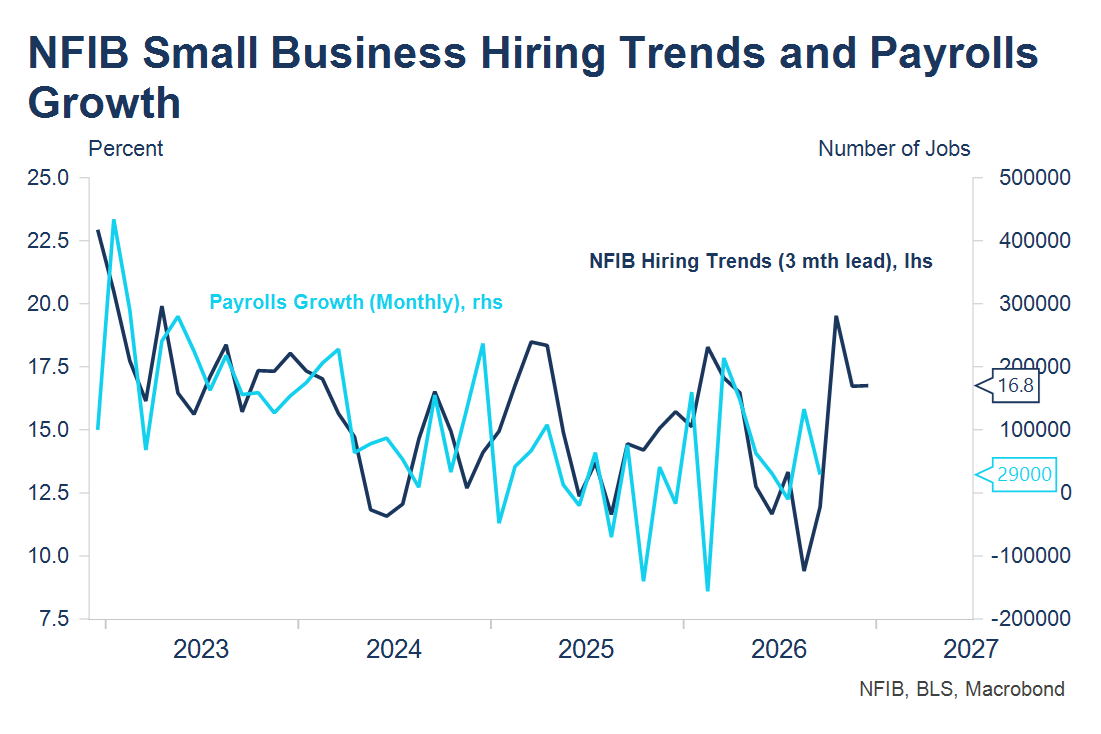
- It’s also a big week for US data. The Q3 GDP release and September PCE data released after the FOMC decided not to further raise interest rates last week, suggested a further increase may have been a better idea. This week’s data should show price pressures remaining very elevated in the ISM surveys, and the risk of an upside surprise on payrolls late in the week.
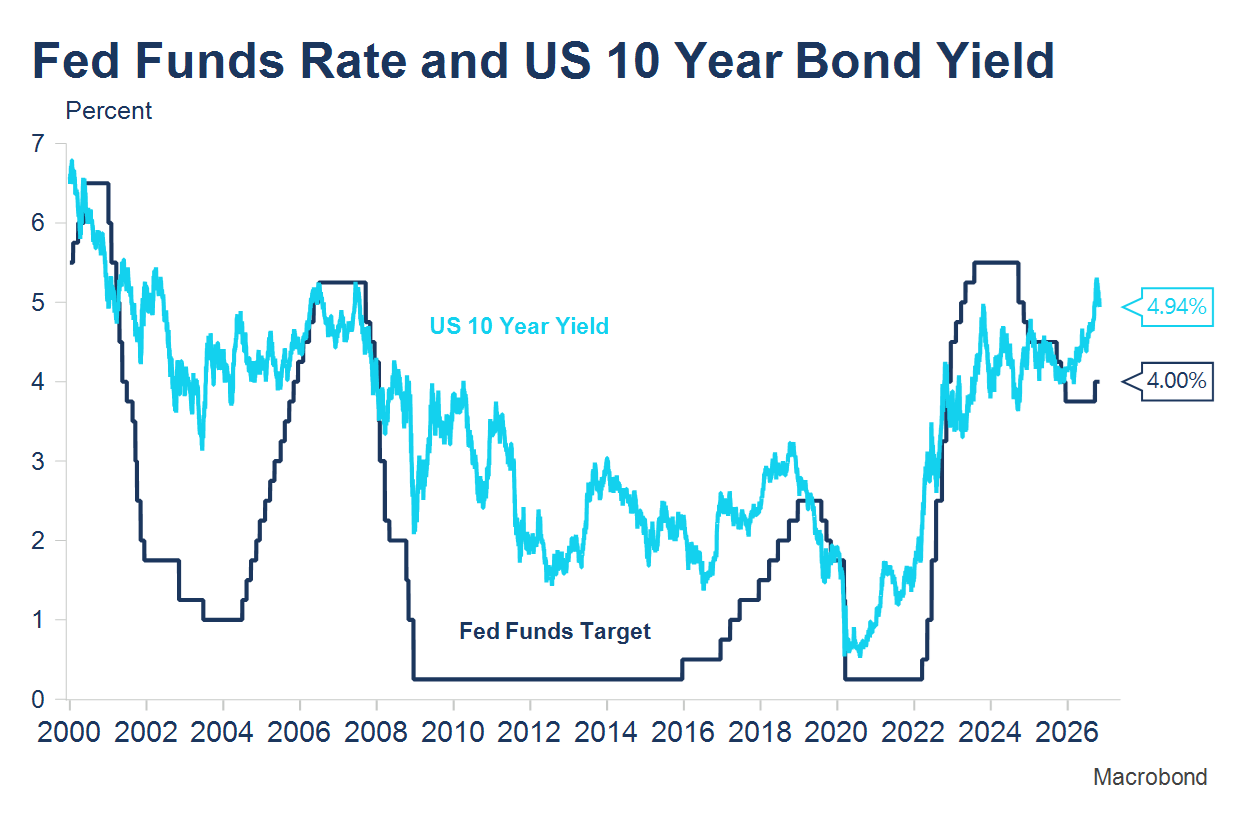
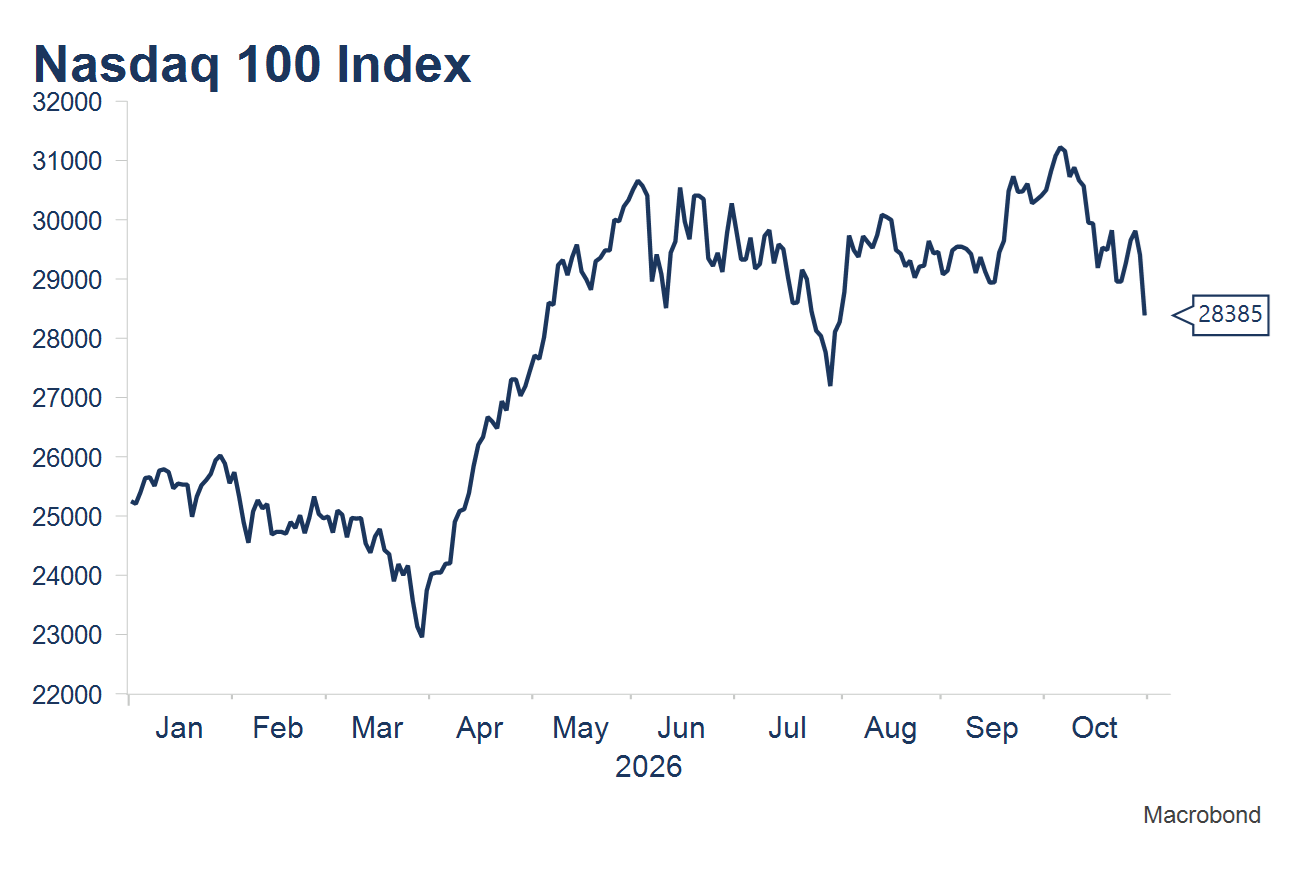
- The bond market outlook remains a complex blend of high oil prices and booming AI spending. Some reassessment of the pace and scale of AI spending is occurring due to the tech stock sell off, but that’s unlikely to prevent a very significant amount of investment over the next few years. Still, with US bond markets already pricing around a 5-5.25% peak for the US funds rate, the weakness in tech stocks was significant enough (the Nasdaq is down 9% from its recent October peak) to see markets reassess the likely peak for US and Australian interest rates further over the past week. That said, further tightening is still expected in both countries in the near term (Australia only tomorrow!). My base case remains cash rates remaining higher for longer in both countries, due to elevated inflation, though it could be the case that we are nearing the peak for Australian cash rates.
What’s priced in, Australia and the US
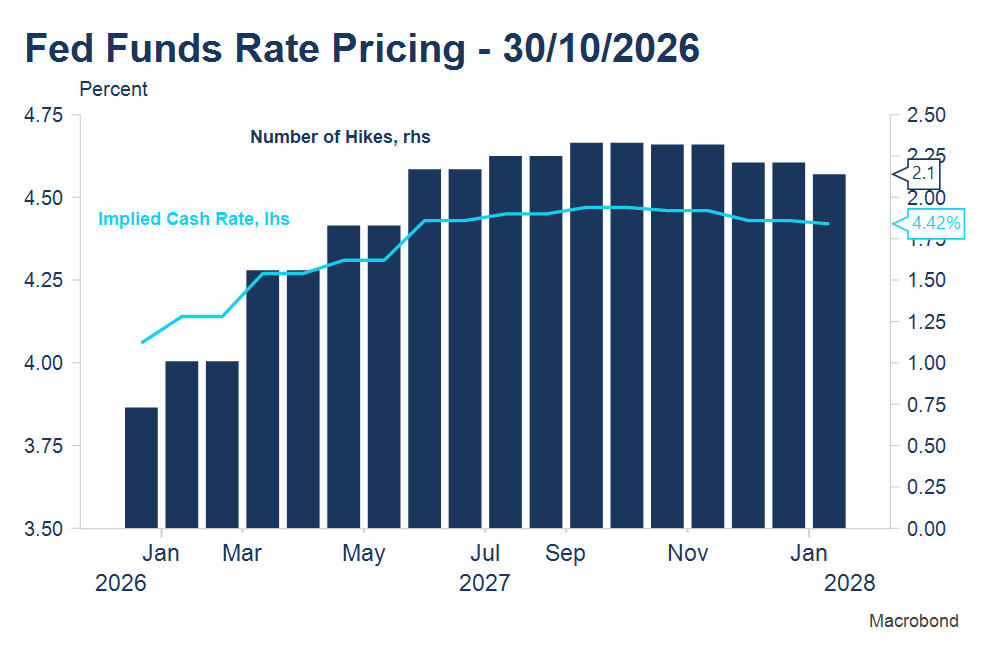
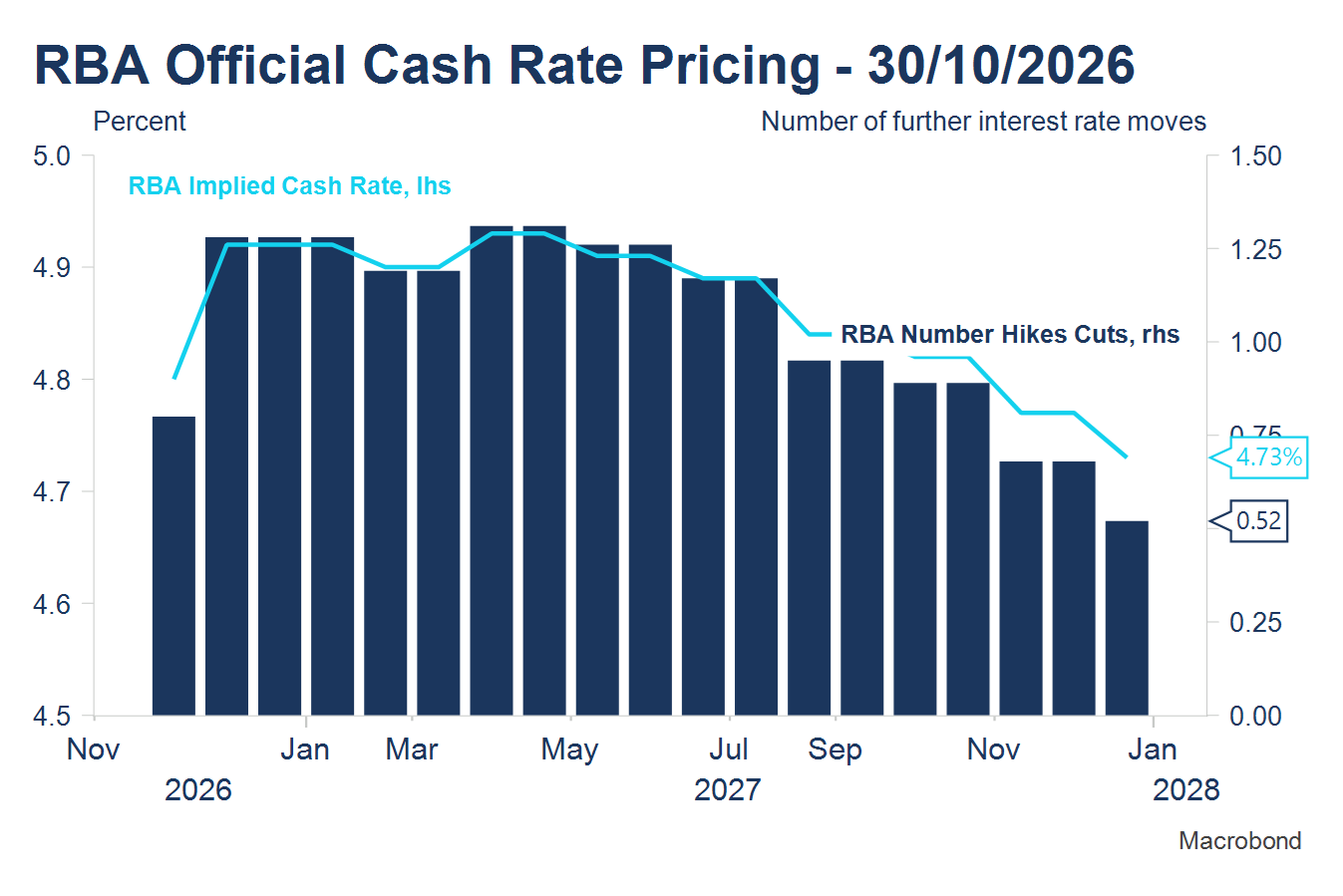
The weakness in technology share prices has seen US markets further reduce the amount of tightening priced into the US interest rate curve such that now a peak cash rate around 4.5% is anticipated (two and a quarter further tightenings), where more than three and a half tightenings were discounted around a month ago. Australian interest rate markets now factor one and a quarter further 25bps interest rate rises and are again beginning to flirt with the idea that interest rates might be reduced in the back half of next year. Markets price highly, but not fully, interest rate increases at each of the next RBA and FOMC Meetings.
Recent developments in interest rate and bond markets
Bond markets have rallied further over the past week, in spite of new highs in oil prices. The continuing sharp drop in the Nasdaq Index due to a variety of concerns with the AI boom, has been the main driver, with the Nasdaq now down 9% from its October peak.
Over the past week:
- Intel fell around 30% on soft earnings guidance
- Alphabet dropped around 13% as the scale of AI investment has seen free cash flow turn negative
- Meta dropped 7% after the company announced a further rise in AI investment spending, which also suggests a period of negative free cash flow.
- Nvidia and copper prices – parts of the AI investment story more linked to actual near-term spending - had smaller declines.
My assessment remains that while markets are beginning to limit the speed and scale of AI spending for some companies, the scale of AI investment is likely to remain very large over the next few years, preventing an early or significant reduction in interest rates.
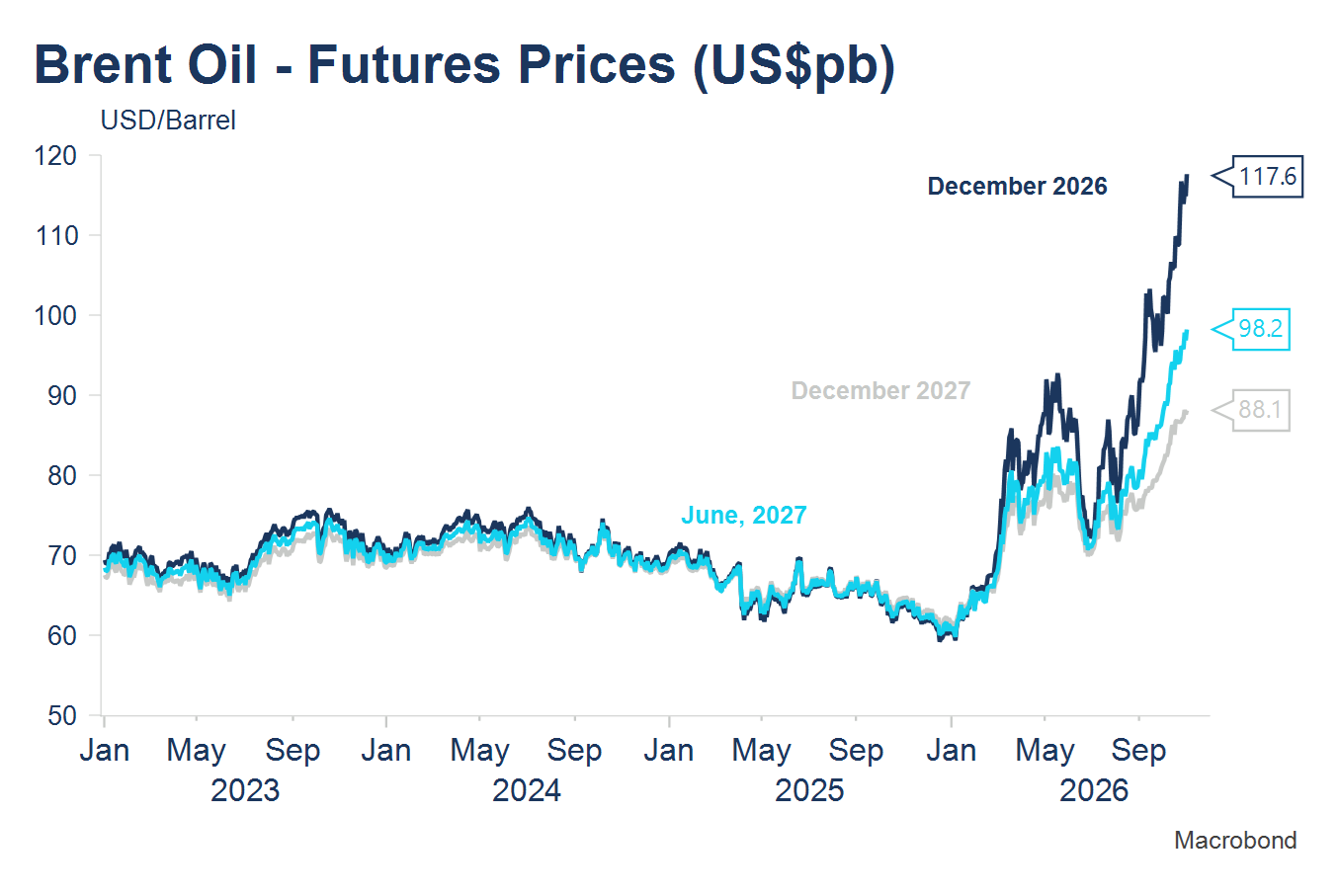
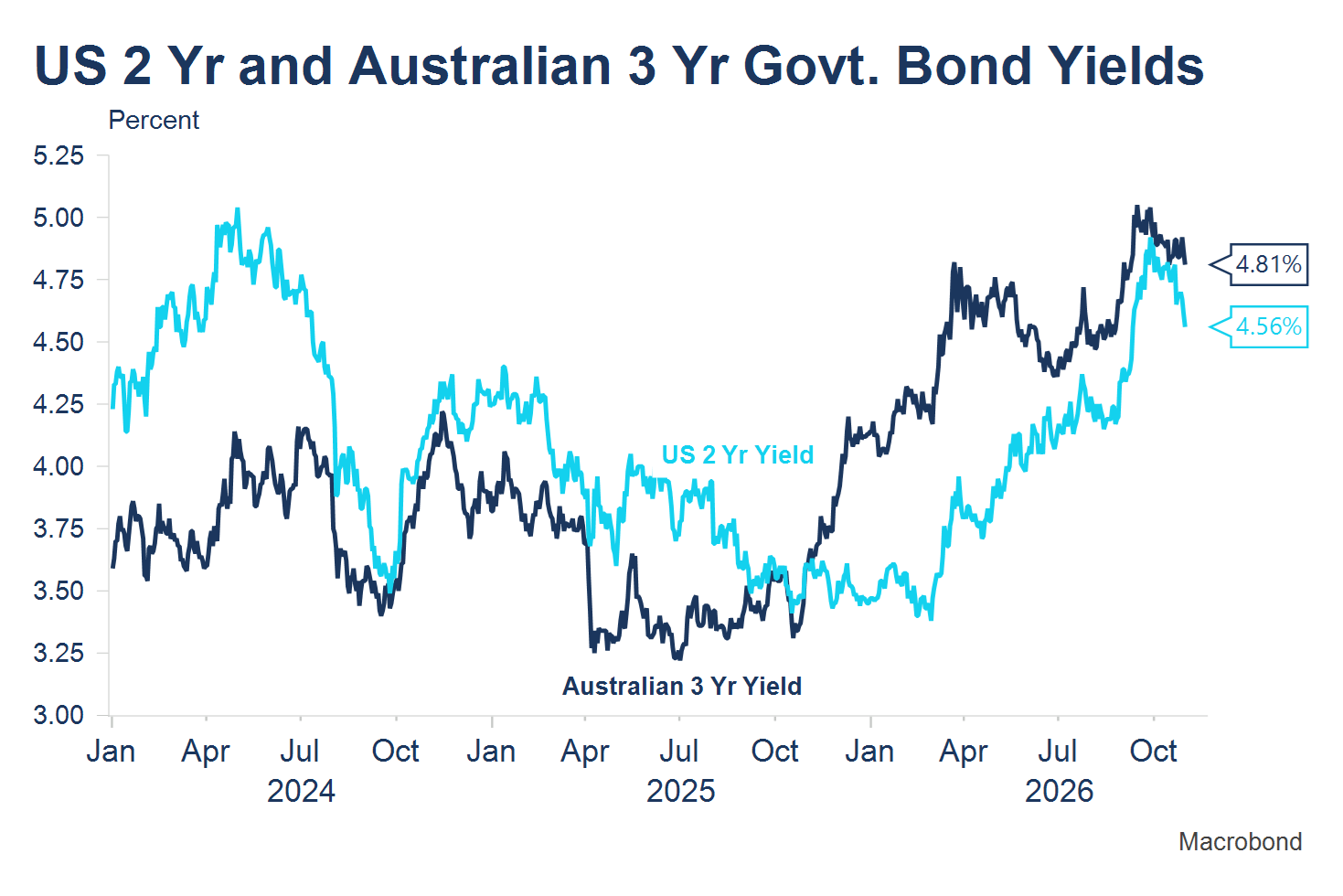
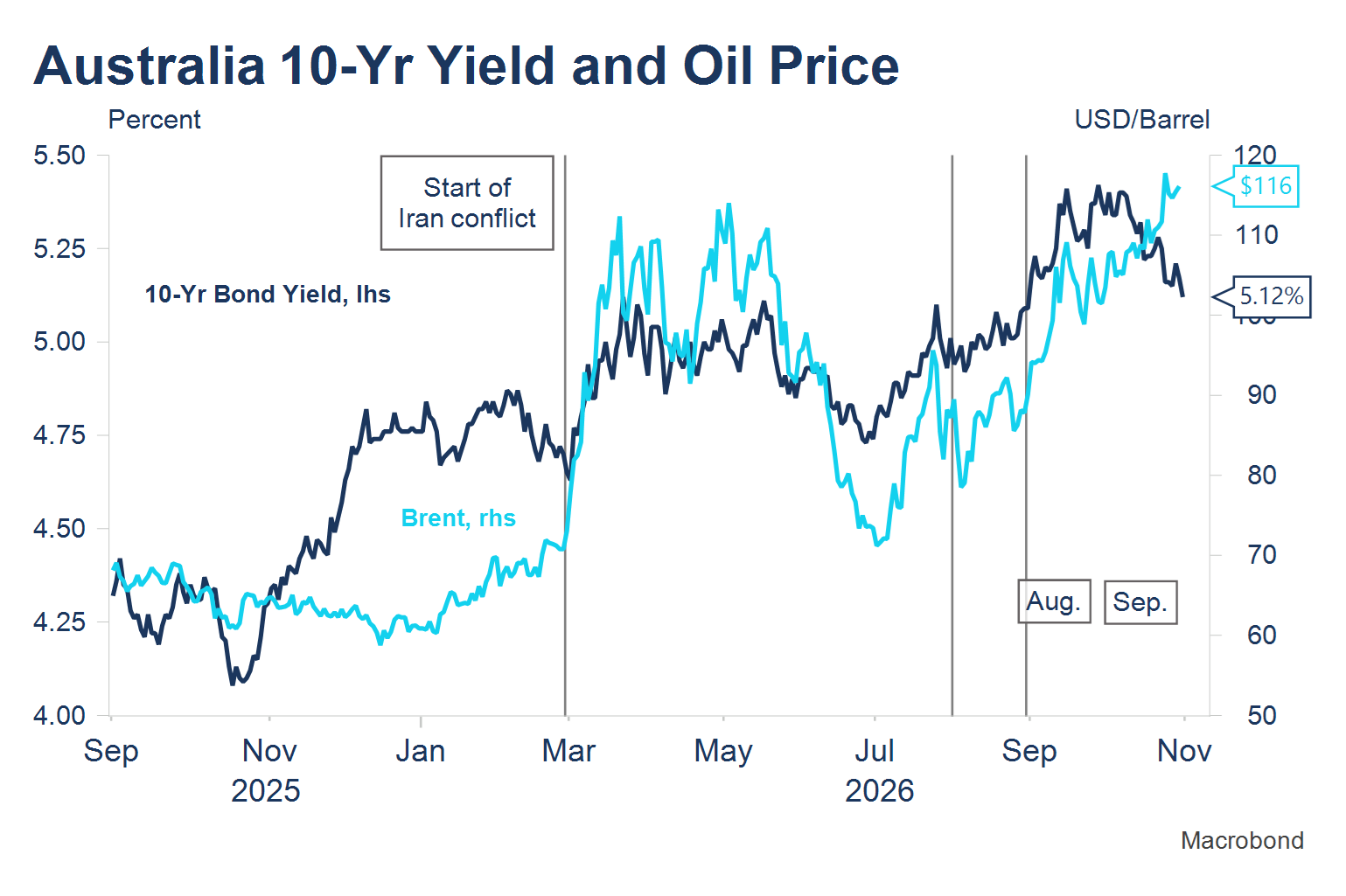
As a result, US 2-year and 10-year yields corrected further this week, even with oil prices rising further. The corrections in Australian three-year yields and ten-year yields were less noticeable after the RBA continues to signal near-term tightening. The US correction was also likely in part due to the FOMC deciding to leave US interest rates unchanged in October. While this was widely expected, there was also discussion that Chair Warsh was less hawkish in his subsequent press conference.
That wasn’t my reading and I continue to expect the FOMC will raise interest rates again in December. Two of the three Fed speakers who spoke on Friday, Logan and Musalem, were very hawkish, suggesting more tightening was needed relatively soon.
Australian and US key events calendar
Times shown are AEDT
Monday 2 November
- 11:00am Melbourne Institute Inflation Gauge (October), previous headline +0.3% m/m, +4.8% y/y
- 11:30am Building Approvals (September), market +2% m/m, previous -6.1% m/m
- 02:00am (Tuesday) US Manufacturing ISM (October), market 54.7, previous 54.5; prices paid 77.5, previous 77.9; employment 52.0, previous 55.3; new orders 54.9, previous 55.3.
Tuesday 3 November
- 02:30pm RBA Interest Rate Decision (all but three economists in the Bloomberg survey expect a 25bps interest rate increase to 4.85%)
- 02:30pm Statement on Monetary Policy (November)
- 03:30pm RBA Governor Press Conference
- 02:00am (Wednesday) US JOLTs Survey expected 7100, previous 7079
- US mid-term elections
Wednesday 4 November
- 08:45am NZ Labour Market (Q3), unemployment rate previous 5.6%
- 11:30am Update Job Vacancies (August), previously released -0.9% q/q
- 11:30am Household Spending Indicator (September), market +0.2% m/m; previous 0.0%
- 02:00am (Thursday) US Non-Manufacturing ISM market 54.7, previous 54.9; prices paid 75.0, previous 74.0; employment 50.0, previous 50.1; new orders 58.8, previous 59.8.
Thursday 5 November
- 05:45pm RBA Deputy Governor Hauser Speech
- 09:30pm US Challenger Job cuts, previous 43,281
- 23:00 Bank of England Interest Rate decision (25bps interest rate increase expected)
- 00:30am (Friday) Initial Jobless Claims, previous 194,000
- 00:50am (Friday) Fed’s Hammack panel participation, Zurich
- 01:10am (Friday) Fed’s Barkin in moderated discussion
Friday 6 November
- 08:30pm Fed’s Williams in moderated discussion
- 12:30am (Saturday) Non-farm payrolls (October), market +55,000, previous +29,000; unemployment rate 4.2%, previous 4.2%
- 01:10am (Saturday) Fed’s Musalem speaks
- 02:00am (Saturday) University of Michigan Inflationary Expectations (November) previous 1-year 4.7%, 5-10 year 3.5%.
- 04:15am Fed’s Bowman in moderated discussion
Saturday 7 November
- NZ General Election
Bond market outlook
With the US bond market already pricing a 5-5.25% peak in the Fed funds rate, the continuing weakness in technology shares and the related reduction in peak pricing for US interest rates has combined to produce a correction in US (and Australian) interest rate markets over the past 4-5 weeks. In recent weeks, the tech sector correction has overwhelmed the continuing rise in oil prices.
Looking ahead, my expectation is that the RBA will most likely leave interest rates unchanged for a number of months after tightening this week, so as to gain fuller insight into the effects on the economy and the track for inflation of what will then have been five interest rate rises over 2026. That will mean Australian interest rate markets will be more influenced by developments in US bond markets.
The prospect of an upside surprise in payrolls at the end of this week should be allowed for, however, with US longer-dated bond markets already pricing a peak Fed Funds rate of 5-5.25% any further weakness in technology shares could see yields decline further before that time. The scale of near-term AI spending likely will remain significant enough that US interest rate expectations cannot adjust lower than expecting two further interest rate increases in the near-term unless there is an almighty tech stock correction or oil prices drop sharply.