RBA Senior staff appearances signal another RBA interest rate increase in November.
Key points
- RBA Assistant Governor Hunter appeared on 60 Minutes last night. Like Deputy Governor Hauser’s Fireside Chat last week, the messaging remained extremely concerned about inflation, domestic capacity constraints and higher inflationary expectations becoming embedded, all of which suggest another interest rate rise is highly likely at the November Board Meeting in just over a week’s time.
- This week, the US Federal Reserve’s Federal Open Market Committee meets to decide on US interest rates. It seems clear the Fed has to tighten US monetary policy further, but less clear why senior officials have been signalling the next move will be delayed until December. However, that’s what they have been signalling, meaning barring a large surprise, the focus of markets will be on the number of dissents in favour of immediate tightening and the Chair’s comments at the subsequent press conference. It’s also a relatively big data week in the US, with strong GDP and PCE price index data expected to be released on Thursday evening Australian time.
- In Australia, the big day is Wednesday. Senior RBA officials appear before a Senate Committee on videoconference, just fifteen minutes before the Q3 and September CPI data are released. This is quite unusual timing and will allow markets to see a real-time reaction of the RBA to the inflation data.
- A large majority of economists predicts a 1% q/q increase for the Q3 trimmed mean. This is notably above the RBA’s 0.8% August forecast, with continuing higher oil prices also to be factored into the November forecast outlook. The latter and reports of embedded higher inflationary expectations are what’s driving the RBA’s more urgent monetary policy response of recent months. I see the risk around a 1% outcome as slightly skewed to a 0.9% q/q print rather than a 1.1% q/q outcome based on the already-released July and August CPI data.
- Even a 0.9% increase would likely not prevent a further interest rate rise, with Deputy Governor Hauser and Assistant Governor Hunter both noting that aggregate demand is tracking ahead of aggregate supply, higher inflation appears to be becoming imbedded in expectations, and the impact of inflation on mortgage holders has been subordinated to the impact of inflation on the poorest in society, renters and indeed the whole Australian population.
- If I’m correct and the RBA does move again in November, I’d then expect a period of observation by the Board to see how what will have been five interest rate rises over 2026 affect the economy and inflation. That period would last at least until February, possibly until May.
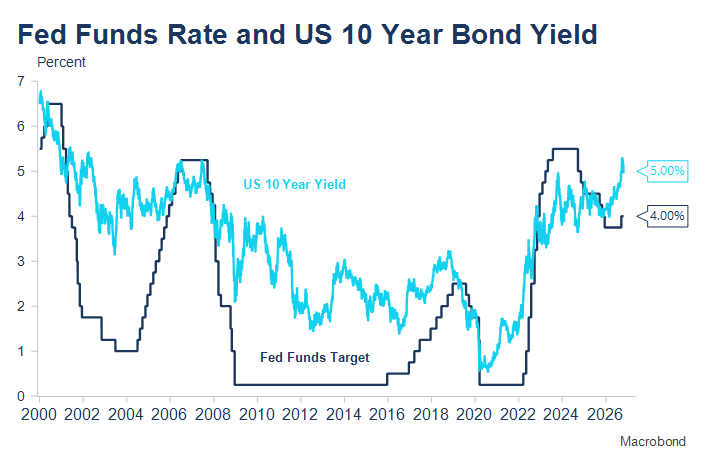
- Bond markets have had a more significant correction than I had been expecting recently. With US markets already pricing a peak Fed funds rate close to 5%, significant technology stock price weakness and some repricing of the next Fed Funds rate rise to December meant these factors overwhelmed the continuing rise in oil prices.
- The market will debate the influence of weaker tech stock share prices on the pipeline of tech spending, and therefore on broader activity and inflation in the US and Australia. My base case remains that even with some reduction in the quantum and pace of tech spending, the quantum of AI spending will remain very large, meaning central banks will continue to need to set policy to moderate this considerable force.
- The key development that could lead to a more sustainable near-term bond market rally would be a resolution, one way or the other, of the conflict in the Middle East. There are continuing reports that the US could resume military operations against Iran after the mid-term elections, though I remain suspicious as to why the US would clearly signal such a timing.
- The RBNZ, ECB, Bank of Canada, Bank of Japan also meet this week, though only the RBNZ is expected to lift interest rates further at this meeting.
Australian and US key events calendar
The small number of events this week is overwhelmed by their importance. The FOMC announces the results of its October meeting at 5am AEDT on Thursday. Following guidance from important Fed officials and recent technology stock price weakness, the market prices a negligible chance of a further tightening this week. Attention will no doubt therefore be focused on the Chair’s subsequent press conference along with the number of dissenters voting in favour of a further immediate tightening. A move at the December meeting remains almost fully priced. It’s not clear to me why the Fed doesn’t move at this meeting, as it is clear US monetary policy is not yet tight enough to moderate inflation. I’d be voting to tighten further!
Two important pieces of US data are subsequently published on Thursday evening Australian time. These will support further tightening in December and will likely suggest that still more tightening will be delivered above and beyond a December move. The September core PCE price index is likely to print +0.3% m/m, almost double the required rate for US PCE inflation to annualise at the Fed’s 2% target. Advance Q3 GDP at around 3% will not present any hurdle for still tighter US monetary policy. The keys for more medium-term market expectations about US interest rates will be informed by the extent to which technology shares continue to correct and whether the conflict in the Middle East can be resolved.
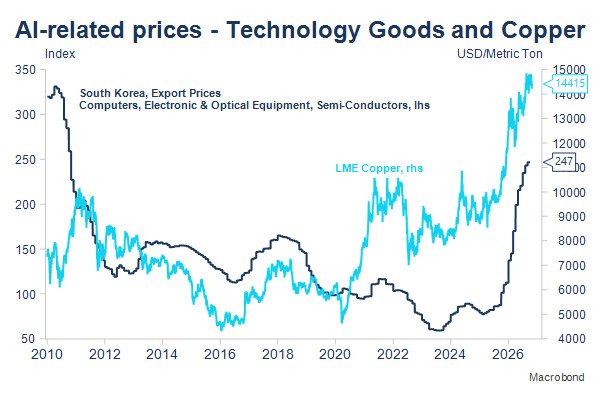
It’s likely that market participants will increasingly debate the extent to which weaker technology share prices will reduce the quantum and/or pace of business investment sourcing from AI. Copper and semi-conductor prices will likely provide market signals as to how this assessment is progressing. My starting point is that there will still be a huge amount of AI investment occurring, even if somewhat less than the previous massive amount that seemed likely.
In Australia there are two key events: senior RBA staff appearing by VC in front of the Senate’s Economics Legislation Committee on Wednesday and the Q3 CPI. The Senate appearance very unusually begins just fifteen minutes before the publication of the all-important Q3 and September CPI figures. This will provide a real-time opportunity to witness the RBA’s reaction to the inflation data. Economists expect a 1% q/q outcome for the trimmed mean, which is the most influential figure for monetary policy. That’s well above the 0.8% incorporated into the RBA’s August SMP forecasts, which together with the continuing rise in oil prices and signs of shifting inflationary expectations, gives the RBA little room to do anything but implement another rate rise if it is to have any chance of returning inflation to 2.5% by the end of next year.
Times shown are AEDT.
Wednesday 28 October
- 11:15am RBA Governor and senior staff appear before Senate Economics Legislation Committee
- 11:30am September and Q3 CPI (1% q/q trimmed mean expected; 3.6% y/y; previous +0.8% q/q; 3.6% y/y)
- 12:00pm RBNZ expected to raise interest rates 25bps
Thursday 29 October
- 00:45am Bank of Canada expected to keep interest rates unchanged
- 5:00am FOMC Meeting
- 5:30am Fed Chair Warsh Press Conference
- 11:30pm US Q3 GDP (3% expected, previous 2.2%)
- 11:30pm PCE Price Index (Headline 0.5% m/m, 3.6% y/y, previous 0.3%/3.4%; core +0.3% m/m, 3.1% y/y, previous 0.2% m/m, 3.0% y/y).
Friday 30 October
- 00:15am ECB expected to leave interest rates unchanged
- 1-2pm Bank of Japan expected to leave interest rates unchanged
- 11:30pm US Employment Cost Index Q3 3% y/y, previous 2.2% y/y
Saturday 31 October
- 03:00am Fed’s Daly Introductory Remarks
- 03:30am Fed’s Musalem Keynote Speech
Recent developments in interest rate and bond markets
The past month has seen a reasonably significant correction in bond markets, while expectations for future central bank policy moves in both the US and Australia have also reduced. A variety of factors has been at play:
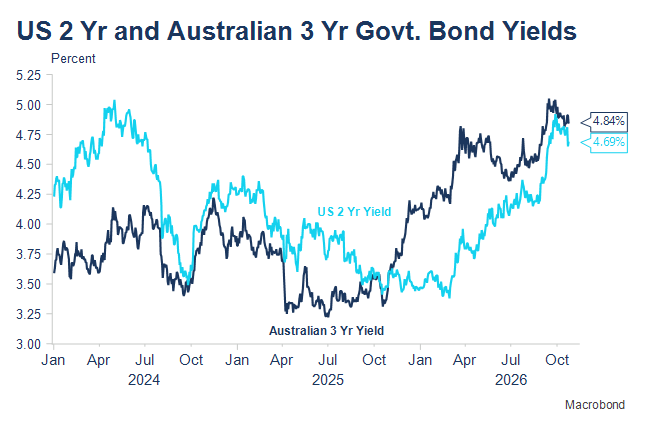
- Australian and US shorter-dated bond yields peaked around the 29th of September, when the NY Fed’s John Williams suggested he supported the next US interest rate rise occurring in December.
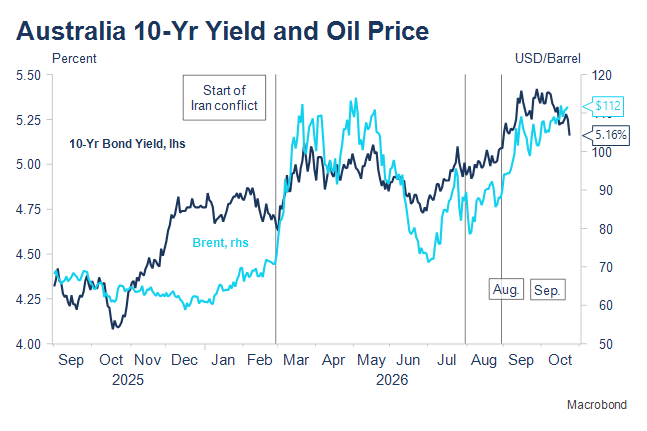
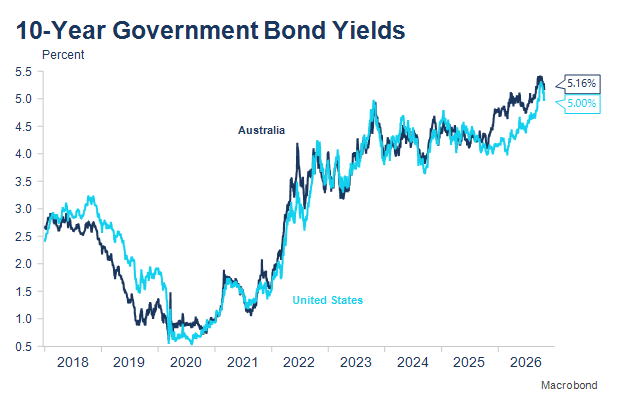
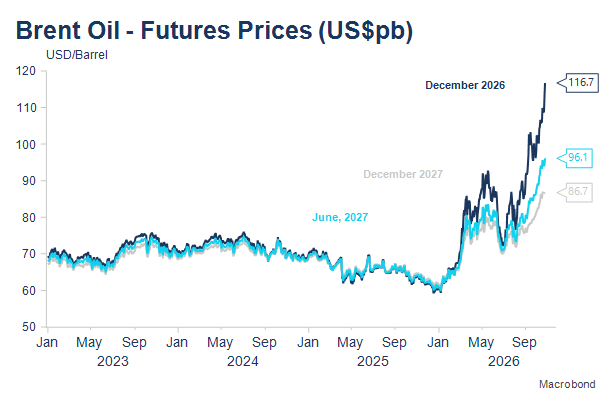
- Long bond yields peaked about a week later; the further increase reflecting the continuing rises in French bond yields and ongoing increases in oil prices, which are trading to new peaks in futures prices since the conflict began early this week.
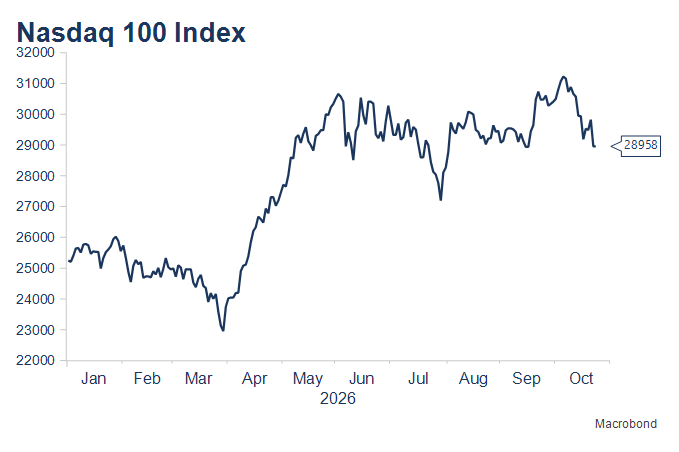
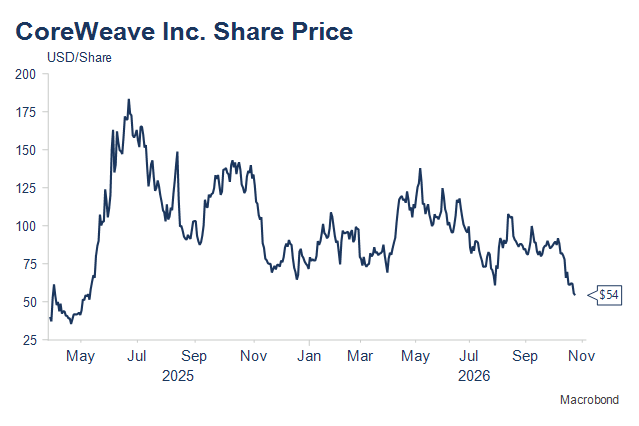
- The peak in long bond yields occurred on 5th October, which coincided with the beginning of a sharp decline in the Nasdaq index and semiconductor prices. This was likely initially caused by rotation out of technology stocks given the sharp bond yield increases of recent months. The latter had also led to increased valuation concerns. Two stock specific developments likely also played a role with the failure of the Firmus IPO and the substantial fall in CoreWeave’s share and debt prices receiving considerable market attention. Both contributed to around a 6% fall in the Nasdaq over the past two and a half weeks.
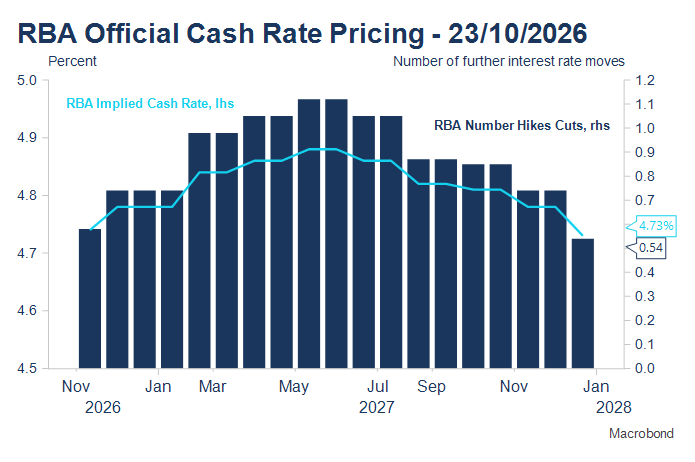
- Australian and US monetary policy expectations both repriced considerably as a result. Australian markets now see only one further tightening by the RBA and are now again beginning to reflect some possibility of interest rate cuts in the second half of next year. Pricing for November has some way to go given recent RBA comments with another rise next week now highly likely. US markets have meanwhile reduced pricing from expecting three and a half further interest rate increases by the middle of next year two weeks ago, to now expecting two and a half rate rises over the same period.
Bond market outlook
With the US bond market already pricing a 5-5.25% peak in the Fed funds rate, the weakness in technology shares and the repricing of expectations about a near-term follow-up US interest rate rise combined to produce a correction in US (and Australian) interest rate pricing over the past 3-4 weeks. These factors overwhelmed the continuing rise in oil prices. Brent oil prices however are now at new peaks for the conflict at around US$117 per barrel this morning as Houthi rebel attacks on Saudia Arabia further raise supply risks.
Looking ahead, Australian markets will need to bring forward pricing of a further RBA interest rate rise to the November Board meeting, which will lead to some further yield rises at the very short end of the Australian yield curve in the very near term. If I’m correct about another interest rate rise next week, I’d expect the RBA to then pause until at least February and quite possibly until May, while it assesses how the five interest rate rises implemented over 2026 are impacting the economy and inflation.
While the technology stock weakness of late will likely slow AI-related spending somewhat, the quantum will still remain massive over coming years. This will likely contribute to US yields remaining elevated, which will also hold global and Australian bond yields up. The biggest factor that could contribute to a significant and more sustained rally/correction in yields would be some resolution to the Middle East conflict. There continues to be increased reports of potential military re-escalation by the US after the mid-terms.