Jackson Hole speech and hot Australian CPI and consumer spending data in conjunction with RBA August Minutes clear the way for both the Fed and RBA to raise interest rates in September.
Key points
- I remain modestly bearish on Australian bond markets, expecting the continuing strength in AI investment spending and too-high inflation in both Australia and the US to see the Federal Reserve and RBA lift their policy interest rates soon.
- Developments in the past week strongly support this view, in my opinion, and suggest the Fed and the RBA will both decide to increase interest rates at their next meetings in September.
- In the US, the annual Jackson Hole speech signalled that with the US economy having strengthened and the US labour market assessed at full employment, the Fed was likely to focus on continuing elevated inflation, which was not clearly trending back to 2%.
- In Australia, the combination of a very high July monthly CPI, strong July Household Spending and August RBA Minutes that suggest further tightening is under active consideration, along with a reduced tolerance by the Board for further slippage on the return of inflation to target, suggests a September rate rise is also highly likely.
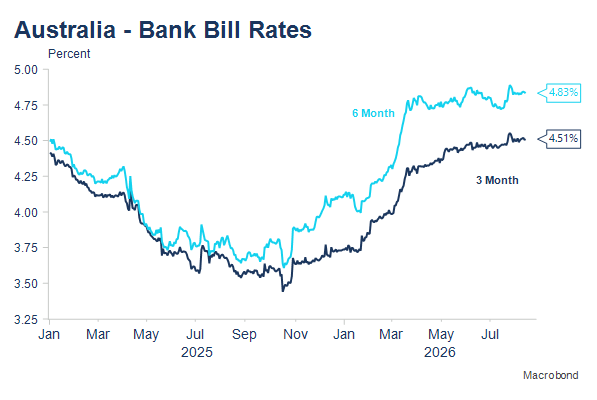
- At this time, an Australian interest rate rise remains only 50% priced by markets, but three of the Australian major banks have reversed their recently reversed forecasts!
- The week will start with markets further adjusting short-term interest rate pricing to reflect the increased likelihood of near-term tightening in the US and Australia.
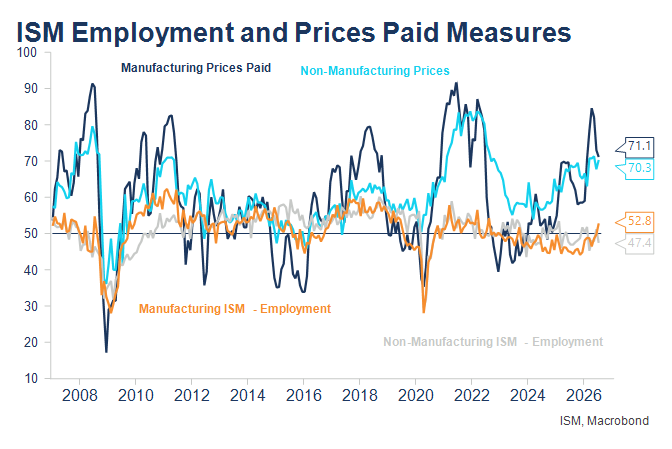
- It’s a very busy week on the data calendar. In the US, it’s the important non-farm payrolls release on Friday (upside risk). I will also focus closely on the ISM surveys, where I expect to see evidence of both stronger employment and higher prices.
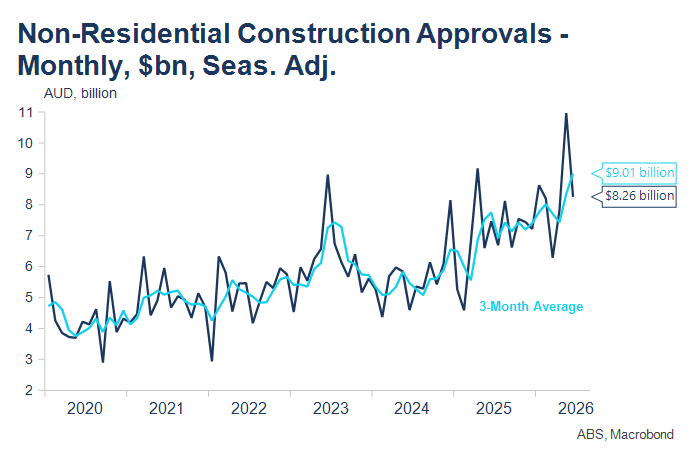
- Q2 Australian GDP is released on Wednesday. It’s not normally an indicator I pay too much attention to, but I think the data may surprise markets to the strong side of the current +0.4% q/q expectation as weak exports and associated transport activity in Q1 bounce back. The non-residential approvals component of building approvals (Tuesday) should also be monitored to assess the scale of the AI build out in Australia. This is a factor that markets and central banks have been slow to focus on and has been behind our view of the emergence of a long slow tightening cycle, characteristic of other investment booms.
- The RBNZ is expected to lift interest rates on Wednesday.
What’s priced in…
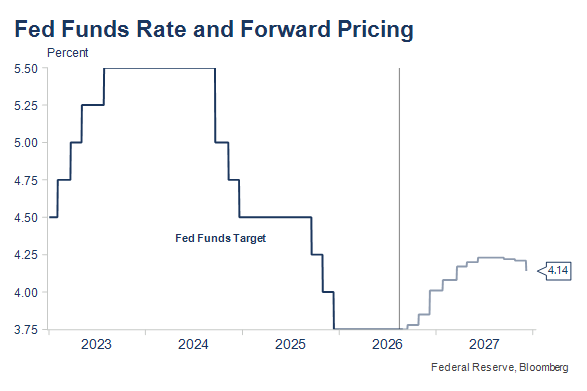
The past week finally saw the reassessment of short-term interest rate markets that I have been waiting for, though given my expectation that both the Fed and the RBA will tighten in September, there is some way further for near-term short-term interest rate pricing to adjust. A rate rise is not fully priced until December in Australia, with a move in September only 50% priced. In the US, larger changes occurred in the past week reflecting Chair Warsh’s assessment of the economy and inflation at the Jackson Hole speech. Effectively nearly a full additional tightening has been added by the middle of next year (nearly two and a half 25bps increases now expected). The market is now attaching a 60% chance of an increase in September (I’d have that closer to 100%) where last week only a 35% chance was seen. One and a half 25bps tightenings are priced by the end of the year, however I’m expecting two moves before the end of the year.
Key developments over the past week
It was a very big week for both Australia and US short-term interest rate markets, courtesy of a combination of central bank assessments and hotter than expected data. Together, these developments make it highly likely that both the Federal Reserve (16 September) and RBA (29 September) will decide to lift their policy rates 25bps, with debate likely to heat up about a second interest rate rise before Christmas (more likely in the US than in Australia). Three of the major Australian banks have reversed their recently reversed forecasts of rate cuts. NAB, now sees a rate rise in September, while ANZ and CBA now forecast rate increases in November. Westpac, the last of the majors to shift to a rate cut as the next move, is expecting the RBA to remain on hold (for now at least).
Reviewing these developments in brief:
- RBA Minutes: The August Minutes revealed the Board actively considered an interest rate rise at the August Board Meeting. The decision included the discussion of upside risks to inflation and phrases such as “at this meeting” and “for the time being”. In the past, such phrases have typically proceeded near-term policy changes, usually within the next three months. Like the FOMC, the RBA signalled that further information would become available by the Board’s next meeting in September. There was also discussion suggesting reduced tolerance by the Board for a further delay in the return of inflation to target.
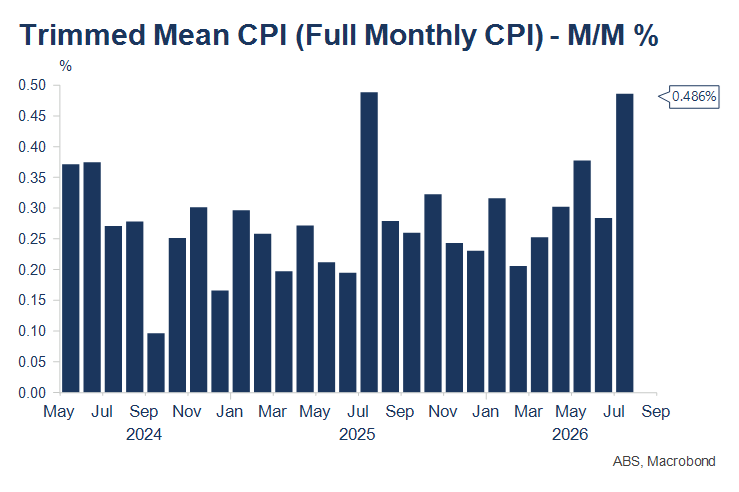
- Australian July CPI: This came in substantially hotter than economists had expected. The +0.486% rise in the monthly trimmed mean was the equal highest reading since July last year and also since the full monthly CPI has been published. The key sub-components the RBA monitors to assess domestic inflationary pressures (chiefly services prices such as meals out and takeaways, hairdressing, dental services etc) increased strongly in the month, though this likely reflected the large Fair Work minimum wage and modern award wage increase decisions this year more than purely strong demand pressures. Nevertheless, to me this suggests an increasing credibility problem for the RBA Board if it does not act in September.
- US July PCE: At face value, this was a slightly worse-than-expected result, being close to the barrier to round to 0.3% m/m. However, a financial services charge that is soon to be treated differently drove much of the rise, suggesting the outcome was actually a little better than expected. Subsequently, the Fed Chair’s Jackson Hole speech made clear that US inflation is still not yet heading in the right direction. Inflation prints for August are likely to be undesirably high in Australia and the US given the renewed rise in oil prices through the second half of July and for most of August.
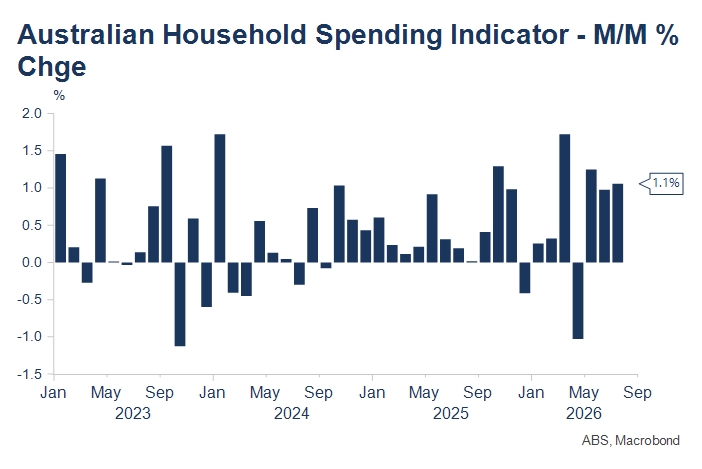
- Australian Household Spending: this data blew away economist forecasts to the high side for the third successive month, rising 1.1% m/m. Unfortunately, this confirmed the message of the previous day’s CPI and will see the RBA either revise up its forecast for consumption or inflation. Neither will give the RBA Board confidence that the current interest rate is the correct policy setting to return inflation to target by the end of next year.
- Jackson Hole: the week rounded out with Fed Chair Warsh’s eagerly anticipated Jackson Hole speech. The speech provoked a significant interest rate market reaction, predominantly on the Chair’s assessment of the US economy and inflation. Warsh described the US economy as having strengthened in recent months, the labour market as being at full employment and inflation remaining too high and not clearly trending towards the Fed’s 2% target. With the Committee awaiting information to become available in the period between the July and September meetings, I think the inference is strong that the Chair will lead the FOMC Committee to raise the Fed Funds rate by 25bps on 16 September. Markets will likely debate the probability of a further increase by year end; something that seems likely to me.
- Central banks are finally increasingly factoring the near-term growth and inflationary implications of AI into the picture, even though the longer-term productivity and employment implications remain unclear. The former has been a key reason we have expected further tightening in Australia and the US, and the emergence of a continued long, slow tightening cycle with no early interest rate cuts that has been characteristic of previous investment booms.
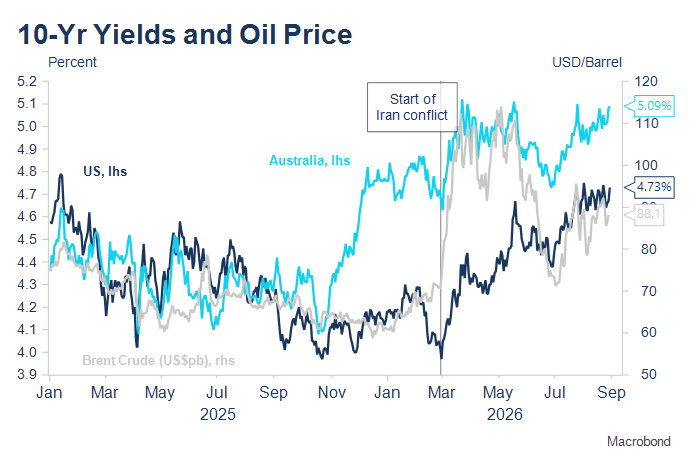
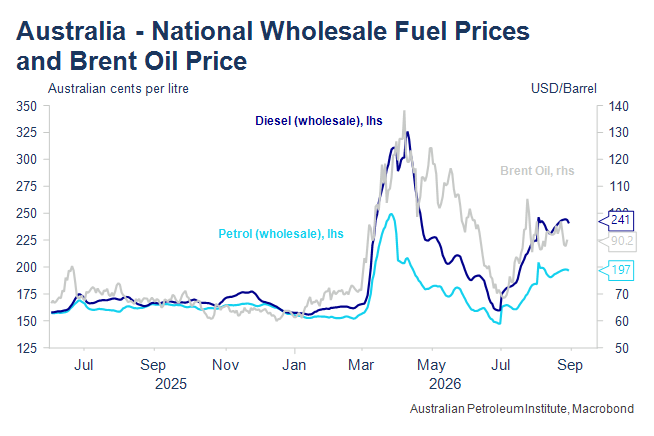
- Oil prices had a moderately lowering effect on bond yields in the early part of last week after US Treasury Secretary Bessent announced his plan to increase global economic pressure on Iran. This was more than reversed by the implications of the Jackson Hole speech. The oil price rises that occurred over July and August will pressure inflation readings and firms’ costs in August.
Australian and US key events calendar
All times shown are AEST.
Monday 31 August
- 11:00am Melbourne Institute Inflation Gauge (August)
- 11:30am Company Profits (Q2) (expected +2%, previous -1.3%)
- 11:30am Inventories (Q2) (expected +0.5%, previous +0.5%)
Tuesday 1 September
- 11:00am $300m 4.75% 2054 bond tender
- 11:30am Net Exports (expected +0.1 ppts contribution, previous -0.8 ppts) – risk upside
- 11:30am Building approvals (expected -5.2% m/m, previous +7.2% m/m; previous non-residential building approvals $8.26bn – this is where the scale of the data centre boom is showing in Australian data).
- Midnight Manufacturing ISM (expected 55.2, previous 55.6, prices and employment readings important – prices likely buoyed by oil price rise, previous 72 and 52.5, respectively)
- Midnight Job Openings, (August) (expected 7.38m, previous 7.359m)
Wednesday 2 September
- 11:00am $900m 1.25% 2032 bond tender
- 11:30am GDP (Q2) (expected +0.4% q/q, +1.9% y/y, previous +0.3% q/q, +2.5% y/y) – risk upside
- 12:00pm RBNZ expected to raise interest rates by 25bps
Thursday 3 September
- 04:00am Fed releases Beige Book for 16 September Meeting
- 3:15pm Assistant Governor Hunter Appearance before the Senate Select Committee on Intergenerational Housing Inequity
- 07:30pm Challenger Job Layoffs, August
- 10:30pm Governor Waller speaks
- Midnight Non-Manufacturing ISM (expected 54.3, previous 54.1 but again, employment and prices components important, previous 47.4 and 70.3, respectively)
Friday 4 September
- 05:00am Fed Governor Hammack Speech
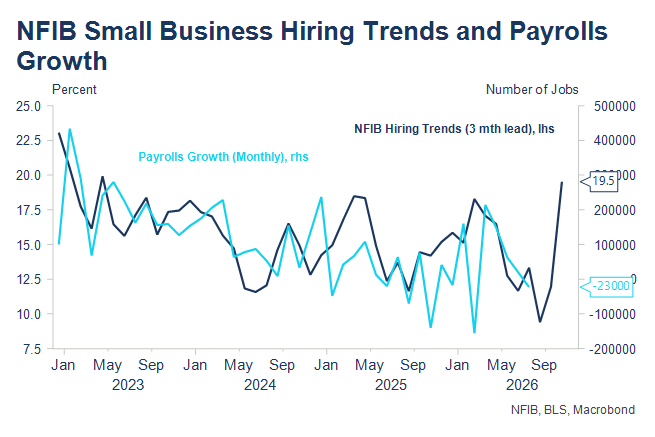
- 10:30pm Non-farm payrolls (August) (expected +55K, 4.1% unemployment, previous -23K and 4.1%) – risk upside on employment.
- Federal Reserve begins communications blackout before 16 September FOMC Meeting.
It’s another big week on the Australian and US calendars.
The big events are the latest US ISM Surveys and Non-Farm Payrolls releases, while Australia has Q2 GDP and Building Approvals. The latter are two releases that would usually rarely rate a mention but are more important at the present time.
Looking at the Australian data first, the final partial indicators to GDP are released today and tomorrow, which will allow economists to finalise their Q2 forecasts. Most will know that I rarely pay much attention to GDP data, given the data is so dated by the time it is released. Economists currently expect a 0.4% q/q outcome. I think there may be some upside risk to these forecasts as last quarter’s GDP was a little weaker than expected as weather impacted mining exports and associated transport activity. A reversal of these effects may become apparent in either today’s inventory data or tomorrow’s net exports figures, boosting GDP in the quarter and leading the RBA to conclude any spare capacity in the economy will not develop as early as previously expected.
Australian building approvals is very much a second-tier indicator, however, the even less focused upon non-residential approvals component should be attracting greater attention, given this is where the emerging strength in the data centre build is showing up. The past two months have seen the highest ever and near equal second highest reading for the value of non-residential building approvals, something that will support the broader economy even as interest rates rise, and which will likely keep construction costs and wages rising relatively rapidly.
In the US (and Australia), the early part of the week is likely to see continued adjustments in interest rate market pricing as a result of Fed Chair Warsh’s speech significantly raising the likelihood of an interest rate increase at the Fed’s September 16 Meeting. There’s important data released this week that may help the market refine that view, with the employment and price components of the latest ISM surveys and the latest Non-Farm Payrolls release key.
I follow the ISM surveys very closely for a real-time read on the US economy, with the comments of respondents particularly important. Last month’s surveys showed price and cost pressures remaining elevated, something that likely worsened in August given oil price developments. The degree to which the employment component of the non-manufacturing survey bounces back from the surprisingly low reading in July is important. However, with the Fed Chair declaring at Jackson Hole the US labour market is effectively at full-employment, allowing the Fed to focus on the (too high) inflation aspect of its mandate, it would likely take a significant downside surprise to non-farm payrolls to dissuade me from the view that the Fed will tighten in September. I also continue to follow the message of the NFIB series, which has done a very good job charting the ebbs and flows of payrolls data and has recently signalled renewed strength in payrolls lies ahead (though not necessarily as early as the August data). The risk appears to be on the upside of the markets’ +55K jobs expectation given the unusual weakness in local government jobs last month, which can be expected to reverse.