Probabilities for US and Australian official interest rate rises in September climb to close to 66%. US CPI, NAB Business Survey, ANZ Job Ads and RBA’s Hauser the key events this week.
Key points
- Markets continue to be driven by oil price developments and the resilience of growth and emerging inflationary pressures associated with the AI investment boom.
- The Middle East situation remains unresolved, keeping oil prices elevated. The strength of AI investment and related commodity and technology supply price rises is an additional inflationary factor, while in the US, tariffs are another source of price rises. In Australia, continuing weak productivity and elevated wages growth are contributing to Australian inflation remaining stubbornly above target.
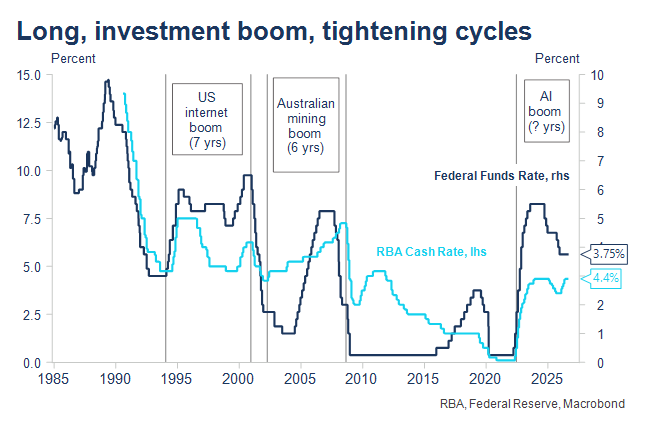
- Market pricing is more convinced – but still not fully convinced – that the US and Australian central banks will lift their policy rates in September, though that remains my expectation. In both countries, however, I’m not expecting a string of aggressive or back-to-back interest rate increases. Instead, my base case is for an extended tightening cycle to emerge, as often occurs during investment booms. The US internet boom was broadly a seven year tightening cycle, with a few mini easing cycles in the middle, while the Australian mining boom saw Australian interest rates rise slowly, and more than anticipated, for 6 years. As a consequence, my preference remains to be a seller of bond rallies more than a buyer of dips at this stage.
- The week ahead contains a very important update on US inflation on Friday. A core CPI reading of +0.3% m/m or above would likely swing the market (and FOMC) vote more fully in favour of a US tightening in September. The market forecast of a +0.2% m/m will still likely be enough to see the Fed tighten given Chair Warsh has signalled frustration with US inflation remaining consistently above target, while AI investment continues to support US growth.
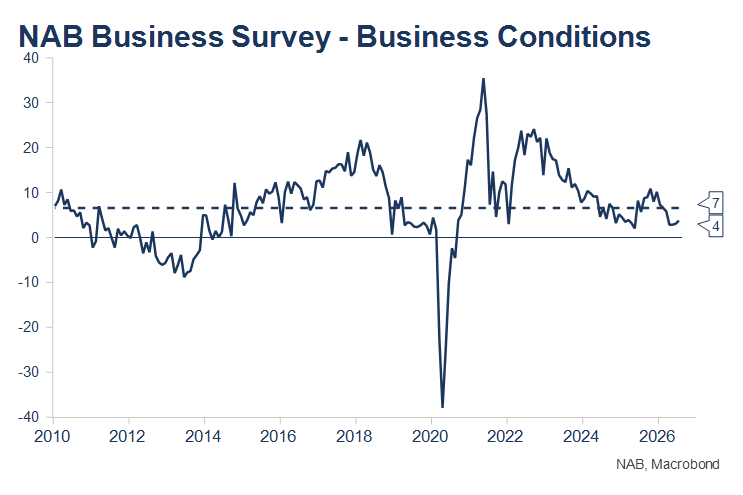
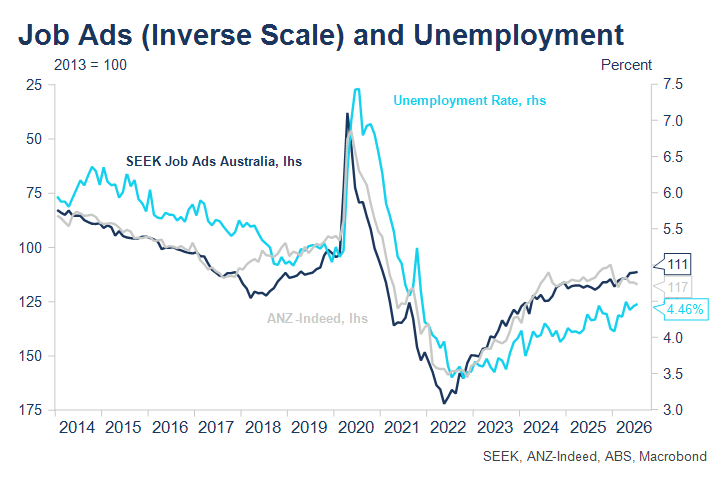
- In Australia, there are important updates to my two favourite indicators of the Australian economy: Job Ads and the NAB Business Survey. Both fell in the immediate aftermath of the commencement of the Iran conflict but have stabilised in recent months. The NAB Survey has also reflected the improvement in construction associated with Australia’s data centre build out. The prior easing in capacity utilisation that saw all the major Australian banks’ economists switch to predicting the next move in Australian interest rates would be a cut, has reversed in recent months and is worth watching closely. Three of the majors have switched back and now expect an RBA rate rise, like me, at this month’s meeting.
- While there will be no further communications from Fed members before September 16 due to the pre-FOMC communications blackout, there are a host of senior RBA staff appearances over the next two weeks. This leaves plenty of scope for the RBA to signal its preferred course of action. I’ll be playing close attention to Deputy Governor Hauser’s appearance on the ABC’s 7.30 Report on Tuesday as I find he tends to communicate very clearly about the RBA’s current thinking.
Key developments over the past week
Bond yields continued to rise over the past week as oil prices increased, Australian GDP printed less weak than expected (but was not strong), and US employment growth surprised to the upside. The US unemployment rate of 4.1% remained very low and consistent with full employment.
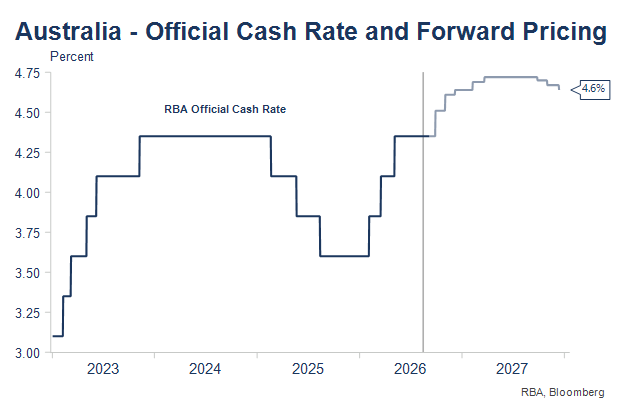
As a result, markets in both the US and Australia continued to factor in an increased probability that both the Fed and the RBA will raise their policy rates at their upcoming September meetings. A US interest rate rise on September 16 is 62% priced after the strong payrolls figure, while an Australian interest rate increase on September 29 is almost exactly two thirds priced. Australian markets discount just under one and a half further 25bps tightenings, while US markets expect nearly two and a half further 25bps rises.
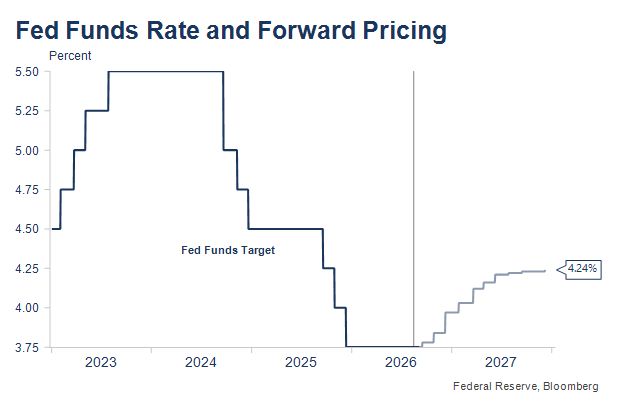
Influential Fed speakers Williams and Waller both noted that their September votes would be significantly influenced by this week’s US August CPI data. Williams also opined that higher longer-dated yields were a natural consequence of the strength of the US economy, due to the strength of AI investment.
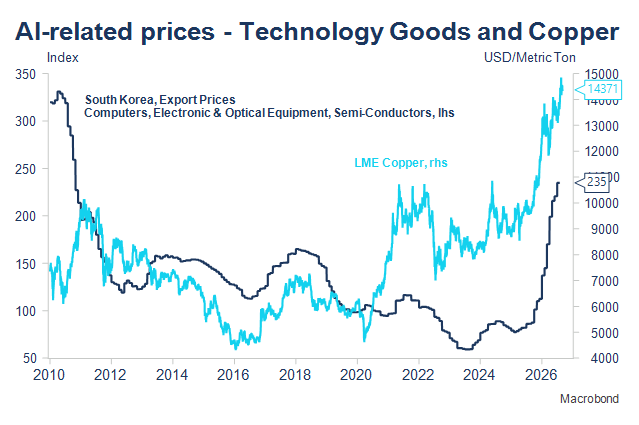
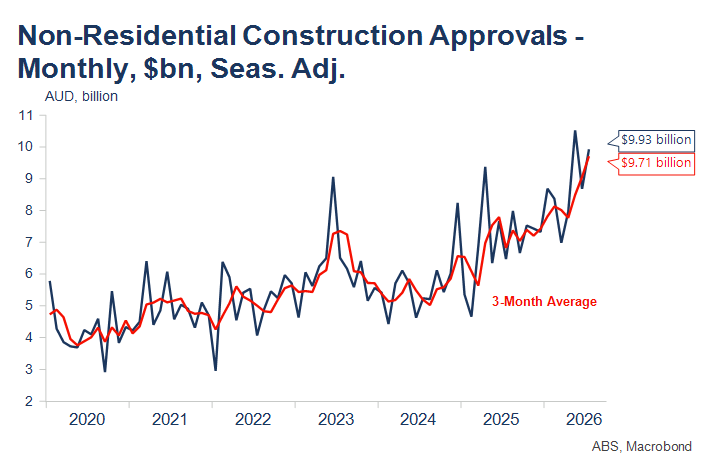
Australian non-residential construction approvals printed the second highest level on record, reflecting the Australian data centre build out. The global build out has been responsible for the sharp – and importantly demand-driven – rise in the prices of copper and many technology components in the first half of this year. To me this suggests the emergence of a long, slow tightening cycle for interest rates, especially in the US.
Reviewing developments in the past week
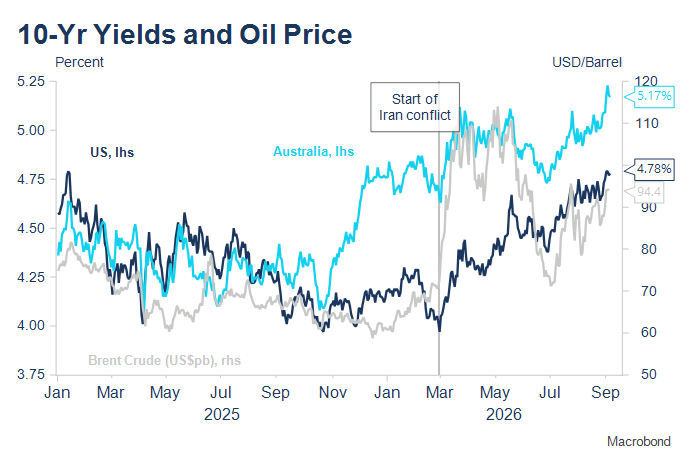
- Oil prices: Oil prices rose further as isolated skirmishes continued. Furthermore, there were few signs of progress toward a more permanent solution. As we have noted for many months, longer bond yields have been positively correlated with oil prices since the conflict began, and this was likely a factor in further rises over the past week.
- Australian GDP: Australian GDP came in marginally stronger than expected at +0.4% q/q. By itself, this was not a strong result and over the past six months, growth has annualised at around 1.5%. However, the higher-than-expected July CPI effectively implies an even more moderate pace of growth will be required for the RBA to deliver at-target inflation, especially as the Board signals reduced tolerance for any further delay in lowering inflation. Productivity growth was again very weak in Q2, while labour cost growth was strong. A number of special factors suggest underlying growth may even have been a little stronger than the +0.4% q/q print (as the recovery of exports from previous weather disruptions remains slow).
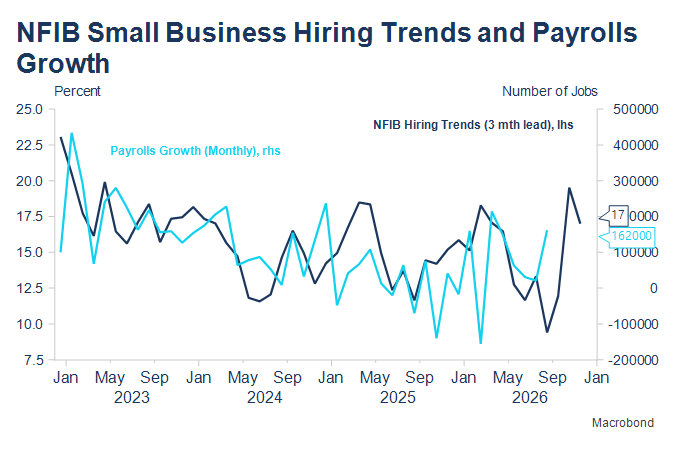
- US employment: Payrolls growth was considerably stronger than expected in August. Employment grew 162,000 compared to market expectations of a 55,000 rise, Upward revisions to the two previous months totalled 55,000. Bounce backs in hospitality and local government education employment accounted for over 100,000 of the increase. This slightly lessens the strength of the print, however, these recoveries were from prior weak readings and therefore should not be fully discounted. The unemployment rate remained at 4.1%; a level Fed Chair Warsh has described as consistent with full employment. The majority of the indicators I follow are now signalling an improvement in the US labour market is in prospect in coming months. The NFIB series is one such indicator.
- Non-residential construction approvals: This is where we can track the prospective strength in construction related to Australian data centre build outs. July saw the second highest value of Australian non-residential construction approved ever (the highest was two months ago). The strength in this part of construction will likely keep pressure on construction materials prices and construction labour costs, even if residential approvals begin to moderate in the first half of next year.
- Williams CNBC interview and Waller speech: These influential members of the Fed both gave their opinion on the US economy and what they will consider for their votes on monetary policy at the upcoming FOMC meeting. Both appear willing to support an increase in interest rates if that is what is needed to help return inflation to target. Waller made this conditional on upcoming data, with the August CPI extremely influential in this regard. Furthermore, his speech suggested that only a modest recalibration of policy would likely be necessary. This reflects his view that inflation is continuing to make progress back to the Fed’s target once account is taken of tariff effects, while he sees little sign of high oil prices spreading more broadly through the economy. Williams had similar thoughts on inflation trends but was open to thoughts that some further tightening might be required to lower above-target inflation. It strikes me that both are focusing more on current inflation prints, which lag the broader economy, than on the likely course of inflation in the next six to twelve months, where the AI boom will boost prices. Longer-term, we must then concern ourselves with the productivity, deflation and employment impacts of AI.
Australian and US key events calendar
All times shown are AEST.
Monday 7 September
- 11:30am ANZ Indeed Job Ads (August)
Tuesday 8 September
- 10:30am Consumer Sentiment (September)
- 11:00am $400m 5% 2036 Bond Tender
- 11:30am NAB Business Survey (August)
- 01:20pm RBA’s Hunter fireside chat at AFR Property Summit
- 07:30pm RBA’s Hauser ABC TV 7.30 Report Interview
Wednesday 9 September
- 11:00am $800m 3.75% 2034 bond tender
Thursday 10 September
- 11:00am Australian Consumer Inflationary Expectations
- 10:30pm US PPI (August): core expected +0.3% m//m and +4.6% y/y; headline expected +0.4% m/m and +5.2% y/y.
Friday 11 September
- 11:00am $800m 2.75% 2029 bond tender
- 10:30pm US CPI (August): core CPI expected +0.2% m/m and 2.4% y/y; previous +0.2% m/m and +2.5% y/y; headline expected +0.4% m/m and +3.4% y/y; previous +0.1% m/m and +3.4% y/y.
- Midnight: US University of Michigan Inflation Expectations (previous: 1-year 4.0%; 5-10-year 3.3%).
It’s a relatively quiet week in the US until Friday night when the very important August CPI is released. As noted above, this figure will be quite influential for a number of important Fed votes at the September meeting. The market expectation is for a monthly result for the core CPI of +0.2% m/m. A +0.3% m/m or higher outcome would likely swing Waller and Williams’ votes in favour of a move at the September 16 Meeting, as it might suggest the August improvement in the CPI was overstated. Either might still be influenced by the Fed Chair and other members given recent stronger employment data, strong AI investment and continued above-target inflation. Chair Warsh intimated strongly in his Jackson Hole speech that he was not happy with continuing above target inflation, while he considered unemployment consistent with full employment. He also noted the US economy had strengthened recently.
In Australia, the action is at the beginning of the week with updates on my two favourite indicators of the Australian economy, namely Job Ads and the NAB Business Survey. Both weakened after the commencement of hostilities with Iran but have not deteriorated further in recent months. There are also a host of senior RBA staff appearances and speeches over the next two weeks, while the Fed is in communications blackout. Deputy Governor Hauser’s appearance on Tuesday is the pick of this week.