RBA likely to remain on hold for an extended period – markets price the peak in Australian interest rates. The FOMC likely to raise US rates in December after strong employment data. Oil prices and technology shares to remain important, with the US mid-terms perhaps altering the trajectory of both.
Key points
- It’s a quieter week in terms of data releases, with just two significant economic releases for Australian and US markets: the NAB Business Survey on Tuesday (along with Job Ads, one of my two favourite indicators of the Australian economy), and the US CPI very early on Wednesday morning.
- However, there are also eleven FOMC members speaking during the course of the week. This should provide a very detailed update on how FOMC members are seeing the data in what the Fed Chair has described as another important intermeeting period for data. The influential NY Fed’s John Williams continued to report that US inflation has remained too high for too long, when speaking on Friday, even though he considered the correct approach presently was to collect more information.
- In Australia, RBA Assistant Governor Hunter spoke on AI at 9.30am today. This was an important update as the RBA has really only been focusing on the short-term impacts of AI on growth and inflation for the past few months. It is also important to see how Hunter describes the medium-term risks to employment. That’s the difficult balance that global central banks have to make. Monetary Policy Board member Baker speaks at the Australian Retail Credit Association conference on Thursday morning.
- Developments in oil prices and technology shares, which have been very influential in recent weeks and again last week, will remain very important in the short-term.
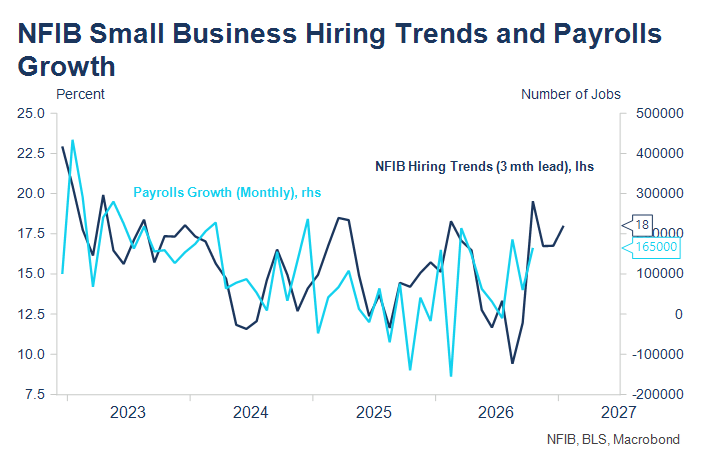
- The NFIB series correctly predicted the very strong US non-farm payrolls data for October published on Friday night. With that data, it seems very likely that the Fed will implement a further tightening of US monetary policy on December 9th. The fact that this is only 70% priced by markets likely reflects the risk of further sharp declines in technology share prices.
- In Australia, the market has agreed with our pre-Board meeting assessment that the RBA Board would likely want to assess the impact on the economy and inflation track of the back-to-back interest rate increases of late September and early November, on top of the three interest rate increases earlier in 2026. The RBA Governor said as much in her post Board Meeting press conference.
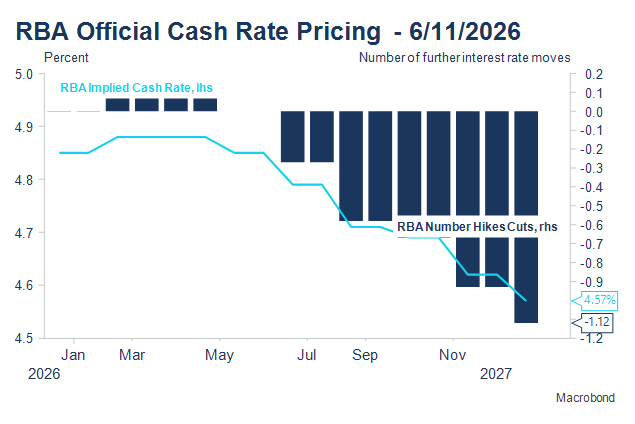
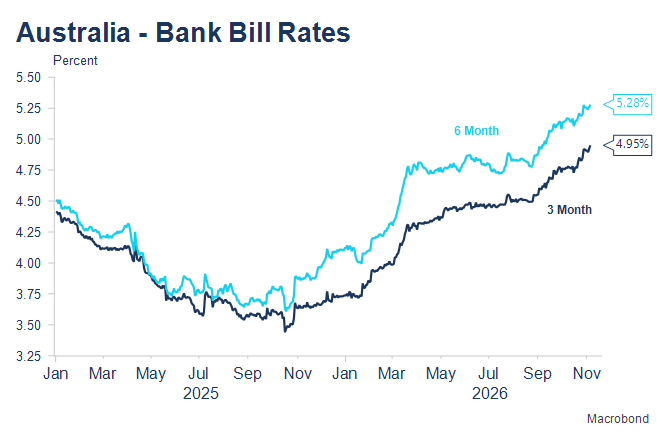
- The market now prices that Australian interest rates have effectively peaked at 4.85% and progressively prices the chance of an interest rate cut from mid-2027. A full 25bps interest rate reduction is now priced by the December 2027 Board Meeting. That’s not impossible but I remain in the higher for longer camp.
- The bond market outlook has continued to be a complex blend predominantly of oil price developments and AI spending. Tariffs and labour market influences in respective economies have played important supporting roles, more so in the US than in Australia. The disastrous US mid-term election results for the Republicans may see more friendly bond market developments for three of these elements. For now, I continue to expect growth to ultimately be supported by significant AI spending. Lower oil prices would be beneficial, though the higher bond yields and cash rate rises of 2026 will likely be a drag on growth through 2027, meaning we could be closer to the peak in cash rates in both countries.
- However, the US short end no longer looks to be pricing sufficient monetary policy tightening in the very short-term. The long end has to balance this force with the risk of further technology share price falls and the risk of significant job losses in the medium-term.
Recent developments in interest rate and bond markets
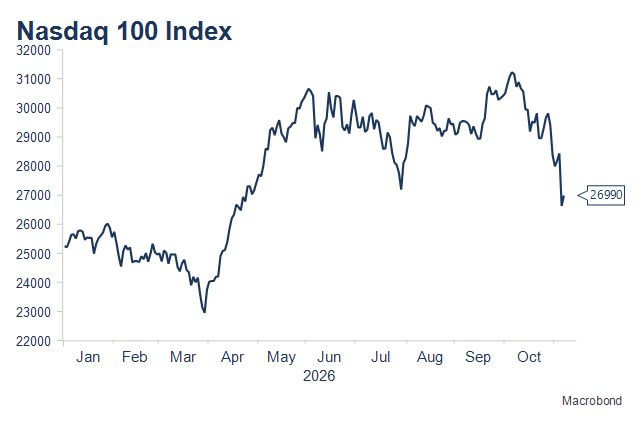
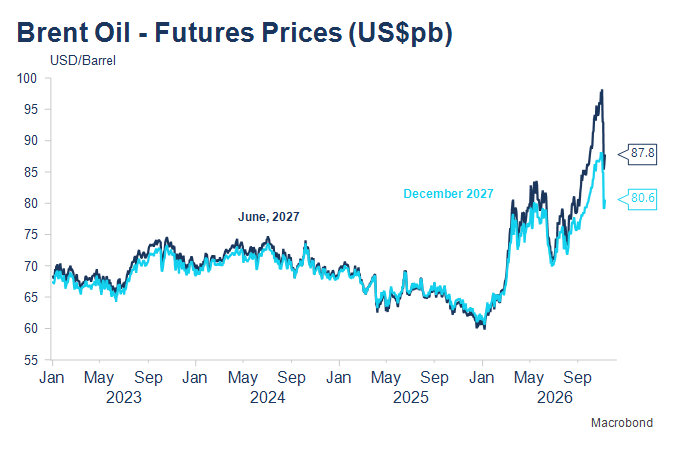
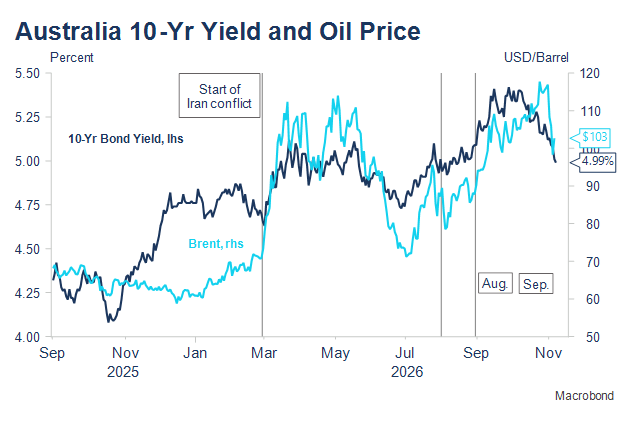
Bond markets have continued to rally and reduce the amount of future monetary policy tightening priced in the US over the past week. This reflects the combination of further significant declines in US technology share prices and much lower oil prices over the week. Both can be partially attributed to the significant wipeout for the Republicans in the US mid-term elections. The markets’ reasoning is that the Democrats will regulate AI, slowing the pace of capex spend, while Vice President Vance’s acknowledgement of the Iran conflict for the Republican’s significant losses might lead to a change of strategy in the Gulf. The Nasdaq fell a further 5% this week as a result of these concerns – with some particularly volatile trading in two sessions. This took the decline to 16% since the early October peak. Brent crude prices meanwhile dropped around US$14 per barrel, reflecting more favourable hopes for conciliation in the Middle East – and the drop in tech stocks.
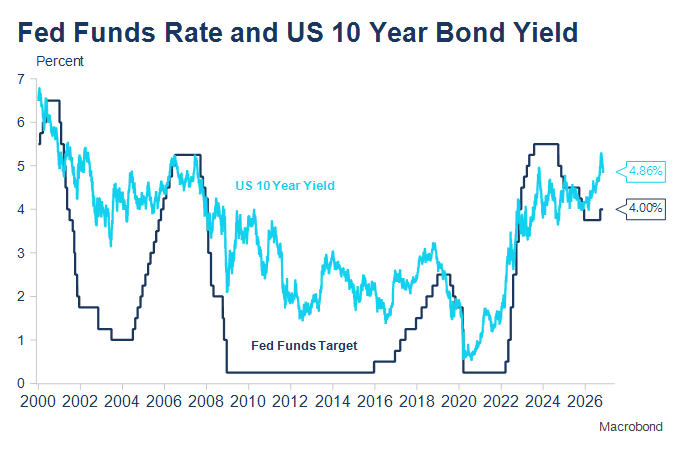
The moves contributed to the continuation of a sharp repricing in the outlook for US monetary policy, with now just over one and a half further 25bps interest rate rises priced by the middle to second half of next year. A few weeks ago, markets were discounting three and a half rate rises over the same period. A rate rise at the December FOMC meeting is still only priced at a 70% chance. That seems too low given the strong payrolls data for October published on Friday night.
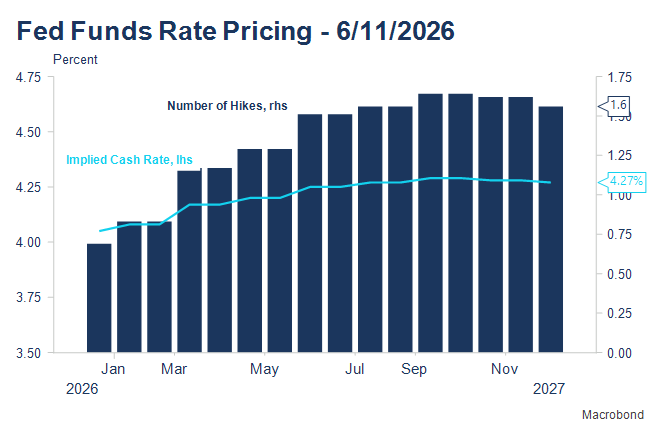
The repricing in Australian markets has been very significant also. After remarking last week that the market was flirting with easing pricing, a full easing is now priced by the December 2027 Board meeting! In the short-term, markets have taken on board our suggestion that the RBA Board would likely enter a period of observation following two recent interest rate increases, building on three earlier increases in the first half of the year.
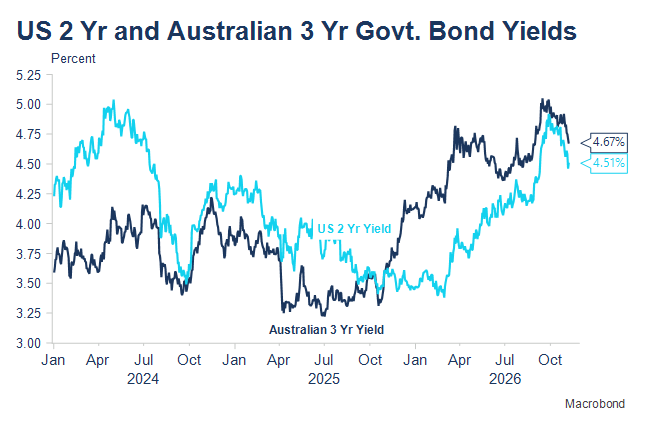
Reflecting the net effect of all these developments, US and Australian terms rates all rallied further over the past week.
Bond market outlook
The medium-term outlook remains a complex blend of the AI boom and Middle East conflict. While a sustained reduction in oil prices would remove a good portion of near-term cost pressures, it would also likely allow US growth to strengthen. My view remains that the AI investment boom will largely continue, even if the Democrats push for greater regulation. As a consequence, it still seems likely that the risk remains for more than the one and a half further US interest rate tightenings currently priced. However, with previous long bond yield increases likely an increasing drag on growth in 2027, it could be that the US is closer to pricing the peak in cash rates, especially as long bond yields at around 4.86% already discount around two to three further 25bps tightenings. Higher for longer and a long, slow tightening cycle remains my base case for the US bond market, barring a significant further collapse in US technology stocks.
The very long-term bond market outlook still depends on the view one takes on AI; will significant job losses occur resulting in deflationary developments and much lower interest rates? That effect still seems over the horizon at this stage, with central banks having to contend with the near-term effects of the AI boom. It will be very interesting to see how Assistant Governor Hunter assesses these short-term versus longer-term issues in her speech this morning.
Australian term yields have continued to be dragged around – and this week dragged lower - by US longer-term bond yield developments. Shorter-dated yields now reflect a full interest rate cut by late next year. Lower oil prices would certainly help from an inflation perspective, and the five interest rate rises enacted over 2026 make it more likely that Australian interest rates may have peaked, as the effects of those tightenings will be a drag on growth through 2027. But investment booms usually see interest rates remaining higher for longer, so I am inclined to think Australian interest rates will not fall as early as late next year.
The week ahead
It’s something of a quieter week ahead in terms of major Australian and US data releases. The NAB Business Survey on Tuesday and the US CPI (Tuesday night/very early Wednesday morning Australian time) are the only publications I consider key. However, as noted earlier, there are eleven individual FOMC members speaking (some during Australian market hours). Assistant Governor Hunter spoke on AI on Monday morning, which was interesting given this wasn’t a topic that seems to have figured significantly in the RBA’s communications or Board’s thinking on inflation or monetary policy until very recently. Monetary Policy Board Member Baker also speaks on Thursday.
All times shown are AEDT.
Monday 9 November .
- 09:30am Assistant Governor, Hunter speaks on AI
Tuesday 10 November
- 02:00am Fed’s Goolsbee speaks
- 04:15am Fed’s Barkin speaks
- 10:30am Westpac Melbourne Institute Consumer Confidence (November), previous 80.4.
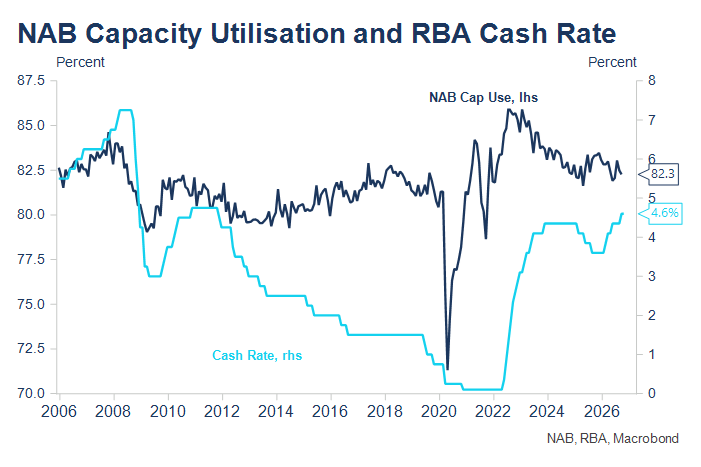
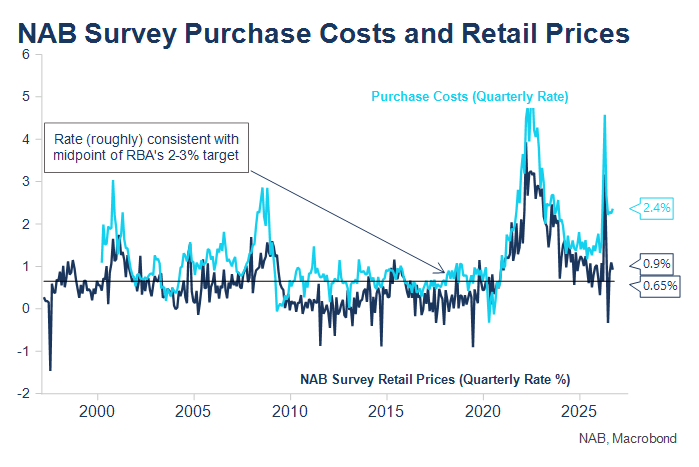
- 11:30am NAB Business Survey (October), previous Business Conditions -1, Capacity Utilisation 82.3%, Input Costs 2.4%, Retail Prices 0.9%.
- 08:00pm Fed’s Waller speaks
Wednesday 11 November
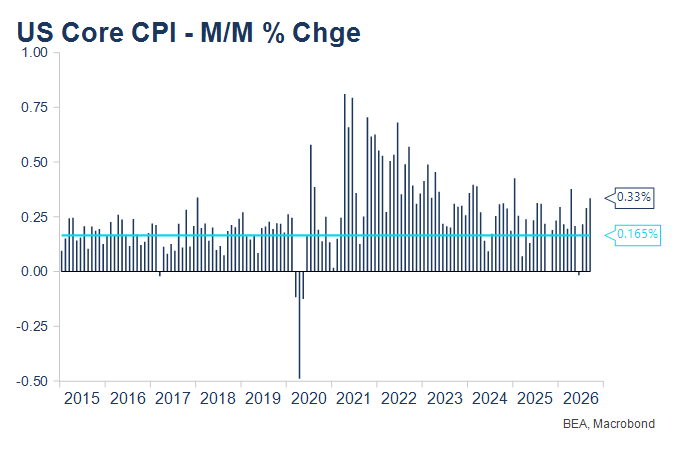
- 00:30am US CPI (October), Headline CPI expected +0.3% m/m, previous +0.6% m/m; Core CPI expected +0.2% m/m, previous +0.3% m/m. Annual rates not available as there was no CPI release a year ago on account of the US government shutdown!
- 05:30am Fed’s Schmid Fireside Chat
- 07:30am Fed’s Bowman speaks
- 10:30am Fed’s Paulson speaks
Thursday 12 November
- 10:30am Monetary Policy Board Member, Marnie Baker speaks at Australian Retail Credit Association Credit Summit.
- 11:00am Australian Consumer Inflation Expectations (November), previous 5.3%
Friday 13 November (actually early Saturday 14 November)
- 00:30am Initial Jobless Claims, expected 195K, previous 189K
- 01:00am Fed’s Hammack speaks
- 02:00am Fed’s Barr speaks
- 03:30am Fed’s Goolsbee speaks
- 05:10am Fed’s Daly speaks
- 10:30am Fed’s Williams panel discussion
- 11:00am (Saturday) Fed’s Jefferson speaks
Detailed data previews
Westpac Consumer Confidence
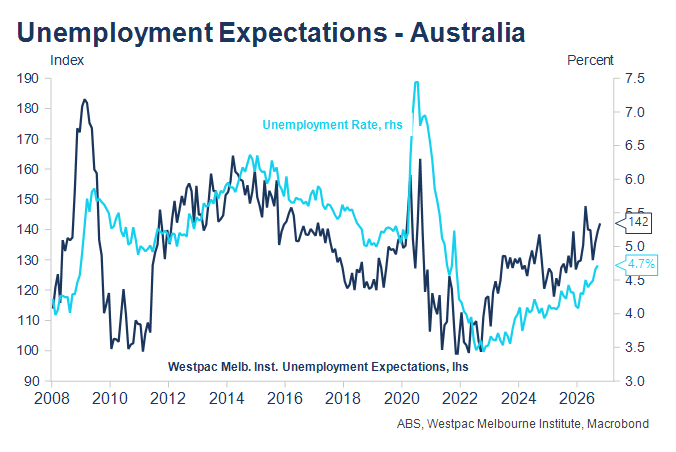
It would be a surprise if consumer confidence did not fall again in November given the second consecutive interest rate rise by the RBA. This adds to the sharp fall in technology share prices of recent weeks. The survey reminds that the main beef of consumers is the high cost of living, which is the accumulation of above-target inflation, rather than the current rate of inflation. I’ll be most interested in the trend for the unemployment expectations series, which generally has some lead over trends in the unemployment rate. The series might shed some light on whether I’m correct to be sceptical about the recent reported significant shift higher in the Australian unemployment rate, which has coincided with the ABS refreshing its survey methodology. I also wonder whether the speculation that AI will replace many jobs may already be affecting unemployment expectations more than it is impacting the unemployment rate.
NAB Business Survey
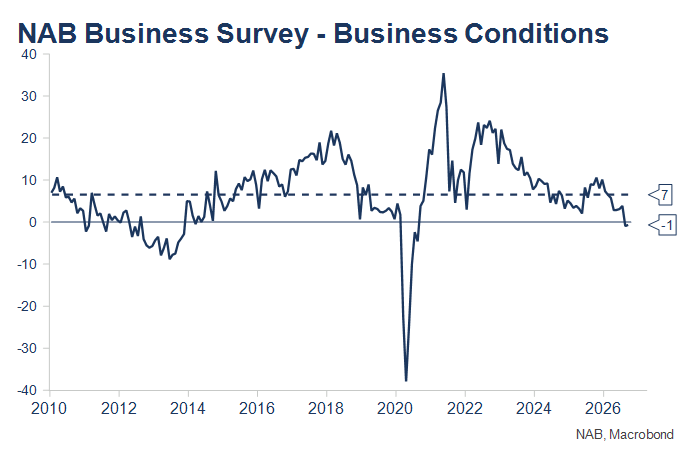
Unlike the US ISM surveys which have signalled improving activity, the NAB Business Survey has seen Australian businesses reporting that business conditions have fallen quite sharply in recent months, most likely due to sharply higher oil, petrol and diesel prices from mid-July to late October. The survey has confirmed with expectations of increasingly divergent economic performance by sector, given the combination of factors impacting on economies.
This month’s survey will have been taken too late to capture either the recent sharp fall in oil prices or the RBA’s latest interest rate rise. The trend in business conditions, however, is a very reliable indicator of the trend for the economy and so is always worth following. Also of interest will be the trend for capacity utilisation – which correlates well with both the unemployment rate and interest rates. Cap use is also important as the RBA continues to use a somewhat questionable capacity constrained narrative to explain above-target inflation. The input cost and retail prices measures will also provide a gauge of how recent elevated oil prices are feeding into broader pricing.
US CPI
The US CPI provides an earlier indication of inflationary trends during the month than the PCE prices index. The latter is of course the official inflation target of the Federal Reserve. Recent monthly headline and core readings have both been elevated, while ISM prices readings have been even more elevated. This suggests upside risk to the +0.2% core CPI rate forecast by the market this month. Recent months have been printing approximately double the required rate of inflation to average at the Fed’s 2% target. Quirkily, because of the US government shutdown a year ago, the BLS is unable to calculate a y/y rate for any CPI measures this month as the CPI was not produced in October 2025.