

The rise in bond yields over past month reflects significant revisions to US monetary policy expectations, oil prices and the AI spending boom. Quiet week ahead.
Key points
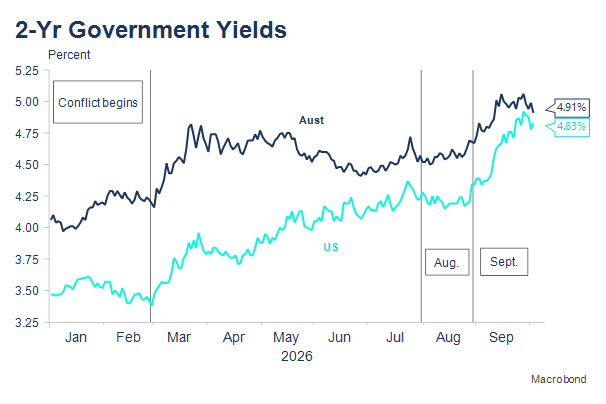
- The rise in bond yields over the past month predominantly reflects the repricing of US monetary policy expectations since Chair Warsh’s Jackson Hole speech in late August. Higher oil prices and the competition for capital between governments and AI are contributing factors.
- Australian yields were dragged higher also, but to a lesser extent, as Australian monetary policy had already been adjusted from the early months of the year, including an expected increase by the RBA last week.
- The RBA tightening reflected the emergence of some of the inflation risks the Board warned of in August. The accompanying statement and press conference were less shrill than expected, reducing the likelihood of a quick follow up rate rise in November, though a likely circa 1% q/q September quarter trimmed mean CPI print in late October still looks to be a difficult issue for the Board to ignore.
- The dominant factors for bond markets remain both above target inflation starting points and the boost to inflation and growth coming from the massive AI investment boom. That’s supporting growth but also creating additional inflationary pressures in the short-term.
- The resultant higher for longer interest rate settings are likely to produce an increasingly divergent economic landscape, benefiting technology, parts of mining and parts of construction, along with services to these sectors, while creating more challenging conditions for interest sensitive sectors, discretionary spending, and companies and households with significant debts.
- On the whole, apart from reports of a third carrier strike group being deployed to the Gulf region, it shapes as a very quiet week for data in Australia, with mainly second tier indicators released. Focus will be on the US Services ISM employment and (particularly) prices components (Monday night) and on the FOMC Minutes (Wednesday night) to judge the likelihood of a quick follow-up tightening in the US.
What can we learn from developments over September about the outlook for interest rates and bond yields?
Sometimes a review of recent developments can help clarify the outlook. When I look back at the month just passed, the key development arguably was the flow-on effects on US monetary policy expectations and bond yields from Fed Chair Warsh’s late August Jackson Hole speech. In that speech, the Chair clearly signalled the likelihood of a US interest rate rise at the mid-September FOMC Meeting. Prior to that time, markets had the first US interest rate rise priced for January 2027 and only discounted just over one and a half interest rate rises over the following twelve months!
Over September, there was a very significant repricing of US monetary policy expectations, contributing to much higher US bond yields across the curve. Australian yields were also dragged higher, but to a lesser extent than US yields as Australian monetary policy expectations did not reprice as significantly due to earlier increases by the RBA. At the time of writing in early October, market pricing now reflected the expectation of a further three and a half 25bps rate increases by the Fed by September 2027, a very large change from just over a month ago.
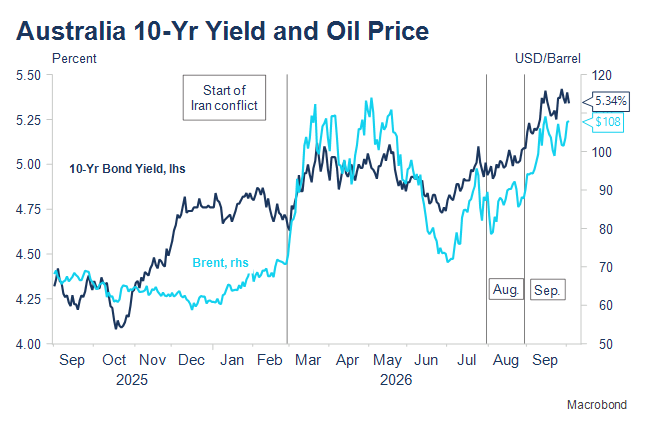
Higher oil prices have also been a factor in the rise in global bond yields. Oil prices rose by nearly a further US$20pb over September, equalling the rise recorded from the low in July to the end of August. Bond yields have broadly tracked oil prices higher, though there have been a variety of other factors underpinning higher bond yields including: (i) (as noted earlier) a (no doubt related) significant shift in expectations for tighter US monetary policy over the past month; (ii) President Trump promising a US$5000 payment for every adult American if the Republicans were to win both Houses at the upcoming mid-term elections; and iii) a sharp rise in US real bond yields, likely reflecting both the repricing of US monetary policy and the competition for funds from continued large US budget deficits and the strong demand for funds from AI investment.
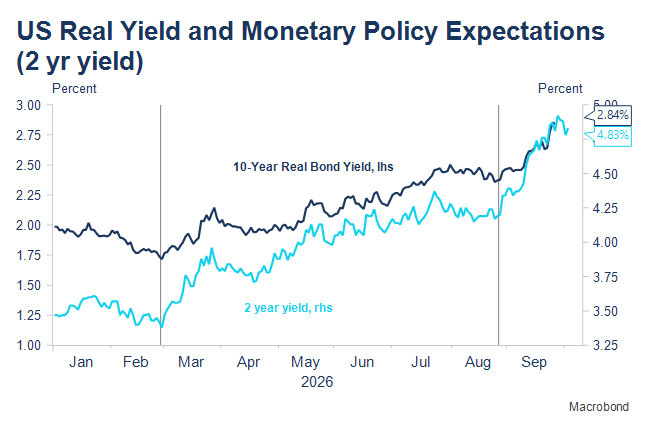
The Fed met market expectations with a unanimous 12-0 vote to raise interest rates on 16 September. Expectations contained in the updated Statement of Economic Projections included a further interest rate rise before the end of 2026. Many members also expect a further increase in 2027, though the median expectation was for unchanged interest rates next year. A minority of four members expects a reduction in interest rates next year, and none expect more than one further interest rate rise. Importantly, the Fed has signalled that with the US labour market effectively at full employment, the Fed is able to focus more on the inflation part of its mandate (lowering PCE inflation to 2%).
As signalled in a multitude of speeches and appearances by senior members of the RBA over September, the RBA Board also unanimously voted to raise Australian interest rates by 25bps at its late September Board meeting. The move reflected what the Board described as the materialisation of some of the upside inflation risks it had warned about in August.
The press release accompanying the decision and Governor’s press conference were less shrill about inflation than expected, suggesting a quick follow up interest rate increase at the November Board Meeting is not as likely as previously expected. Market pricing does not fully discount the next Australian interest rate rise now until the early May meeting in 2027.
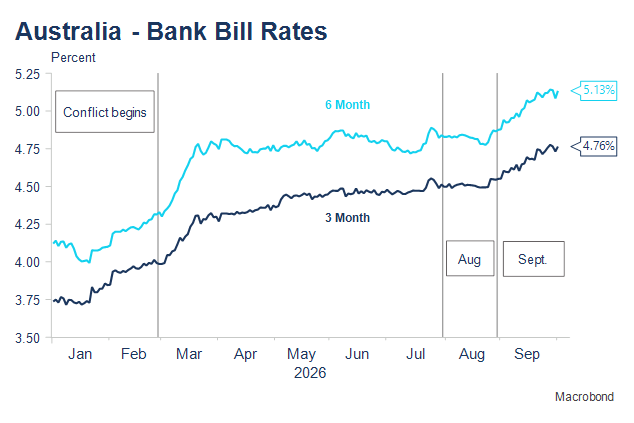
That said, with petrol prices remaining very elevated and the September quarter trimmed mean likely to print around 0.9%-1.0% q/q, there is a strong argument for a further tightening ahead of that time if the Board hopes to have any chance of returning Australian inflation to target by the second half of 2027.
The AI investment boom figured more prominently in the tightening decisions of both the RBA and FOMC. Central banks around the world are somewhat belatedly becoming more cognisant of the fact that the short-term impact of the boom is inflationary, with demand-driven impacts on selected commodity prices, technology inputs and construction and utilities’ prices. Investment booms tend to be long-lasting and often see interest rates rise further and remain higher for longer than originally anticipated. That remains my broad expectation.
The most unusual development of the month was President Trump’s promise of a US$5,000 payment (the Trump Dividend) to every adult American if the Republicans were to win both Houses at the upcoming mid-term elections. Prediction markets currently attribute only an 8% likelihood to this eventuality. If it were to occur, however, there would likely be a further rise in bond yields as the size of the stimulus would be a massive US$1.2-1.3trn or around 3.5% of US GDP.
Other significant economic developments over September included:
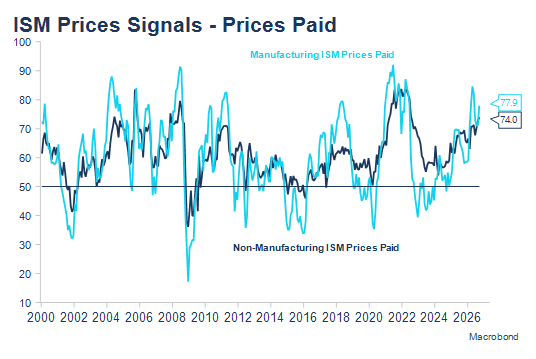
- US inflation indicators from the ISM surveys remained very elevated. This is important for US monetary policy expectations as continuing very low US unemployment frees the Fed to focus on improving the inflation part of its mandate.
- Australian employment was far stronger than expected at +40,000 but paradoxically, the unemployment rate also surprised, rising to 4.6% from 4.5% and being very close to rounding to 4.7%. Some changes to the survey methodology look to have artificially boosted the unemployment rate this month by around 0.1 percentage points, which reduces the importance of this print for near-term monetary policy (indeed the RBA tightened after this data had been released).
- Subsequent to the RBA’s interest rate decision, the August CPI revealed that trimmed mean inflation dropped back to 0.24% in August, though that did follow the exceptionally high 0.5% m/m reading in July. There appears to be some residual seasonality in the monthly trimmed mean calculation. Taken together, the figures seem consistent with a 0.9%-1.0% q/q trimmed mean in Q3. There may be some upside risk to this forecast as price trends in September might be quite strong given two and a half months of much higher petrol and diesel prices.
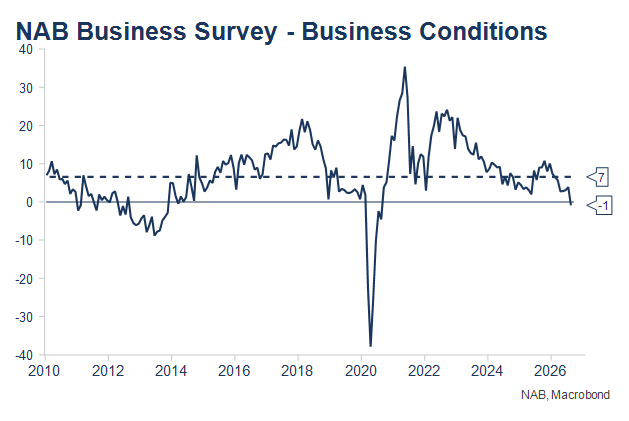
- SEEK job ads rose more than fractionally for the first time since January, with a 1.1% rise recorded in August. If this trend were continued, it would be a very important development given the series is very closely correlated with both unemployment and interest rates. Moving in the other direction, however, the NAB Business Survey recorded its weakest reading since the pandemic with conditions likely impacted by the sharp rise in oil prices in recent months. The September interest rate increase is unlikely to help coming surveys. Household spending – which had risen strongly for three months in succession – was unchanged in August. This can be attributed to EOFY sales activity ending and recreation and culture spending in July associated with the US NFL visit to Melbourne, not being repeated. Part of the apparent “strength” likely reflects higher prices.
Conclusion: The significant sell off in US bond markets of the past month appears to mainly reflect the repricing of short-term interest rate and monetary policy expectations that occurred since the Fed Chair’s Jackson Hole speech. Higher oil prices and the size of the AI investment boom and funding requirement are part of the story also. It remains the case that any resolution to the Middle East crisis could temporarily unwind some of these inflation concerns and the tightening that is priced. However, news that a third US aircraft carrier strike group is being deployed to the Gulf region suggests the reverse risk applies in the near-term. The size of the AI investment boom remains the dominant influence medium-term and that suggests interest rates remain in a slowly rising trend. That’s my base case and it’s often the case during investment booms that interest rates rise slowly but ultimately reach higher peaks that are sustained for longer than markets initially expected.
Australian and US key events calendar
After the past two very hectic weeks, it is a much quieter calendar ahead of us this week in both Australia and the US. Australian data is very much second tier, with most interest likely to be in the trend for the unemployment expectations component of the latest consumer confidence survey, which not surprisingly has a good correlation with the trend for unemployment. In the US, there is a much reduced schedule of Fed speakers. The key events for the week are the FOMC Minutes early on Thursday morning – to ascertain the hurdle for a further rate rise in October. The Services ISM on Monday night Australian time is interesting on two counts – whether the employment question bounces back (it did reach positive territory for the first time in two months but was not quite as strong as I’d expected); and the extent to which the prices component rises (suggesting inflationary pressures remain elevated – it again rose and there were frequent comments of high fuel and other commodities prices).
Times shown are in AEDT.
Monday 5 October
- Public holiday in some states, including NSW
- 11:00am Melbourne Institute Inflation Gauge (September) (previous +0.5% m/m; +4.8% y/y)
Tuesday 6 October
- 01:00am Services ISM (September)
- 10:30am Westpac Consumer Confidence (October)
- 11:30am ANZ Indeed Job Ads (September) (previous +2.5% m/m)
Wednesday 7 October
- 00:05am Fed’s Williams moderates panel
- 10:00am Fed’s Logan moderates conversation
Thursday 8 October
- 05:00am FOMC Minutes
- 11:00am Australian consumer inflation expectations (October) (previous 4.9%)
- 11:30pm Initial Jobless Claims [previous +197K]
Friday 9 October
- 04:40am Fed’s Musalem speaks
Saturday 10 October
- 01:00am University of Michigan Consumer Inflationary Expectations (previous: 1-year 4.6%; 5-10 year 3.4%).